
If you're running a small business in Philly, your website tech stack probably isn't keeping you up at night. You've got customers to serve, payroll to make, and a business to run. But here's the thing: the tools and technologies powering your website in 2026 can either make your life easier or become a constant drain on time and money.
We're not talking about chasing every shiny new framework or rebuilding your site from scratch every year. We're talking about smart, practical choices that help your website load faster, convert better, and require less babysitting. Let's break down what actually matters right now.
Why Your Tech Stack Matters More Than Ever
Your website's technology stack, the collection of tools, frameworks, and services that make it work, directly impacts three things small businesses care about: speed, search rankings, and how much maintenance you're stuck paying for.
Google's Core Web Vitals are now a ranking factor, which means slow sites get buried. AI tools have become table stakes for staying competitive. And customers expect websites that load in under three seconds, work perfectly on mobile, and don't feel like they were built in 2015.
The good news? You don't need a computer science degree to make smart choices. You just need to know what works.
Frontend: Keep It Fast, Keep It Simple
The frontend is what visitors actually see and interact with. In 2026, the winning approach is simple: use modern frameworks that prioritize performance and avoid JavaScript bloat.
Next.js remains the stable, reliable choice for businesses that want a proven solution. It combines server-side rendering with modern React, giving you speed and flexibility without the headaches. For smaller sites or content-focused businesses, Astro is a game-changer, it delivers mostly static HTML and only loads JavaScript where absolutely necessary.
If your developer mentions SvelteKit or Qwik, don't panic. These are legitimate modern frameworks that load faster and feel snappier than older approaches. The key question: will this make my site faster and easier to maintain? If yes, proceed.
Tailwind CSS has become the default for styling. It's utility-first, which sounds technical but basically means your developers can work faster and your site will be more consistent. Most importantly, modern CSS can now handle animations and interactions that used to require heavy JavaScript libraries.
Here's what to avoid: Single-Page Applications (SPAs) that load everything upfront and bog down performance. Unless you're building something truly interactive (think web app, not brochure site), you probably don't need it.
AI Integration Isn't Optional Anymore
This is the big shift. In 2026, every business website should have some level of AI integration. Not because it's trendy, but because it legitimately improves how your site works for both you and your customers.
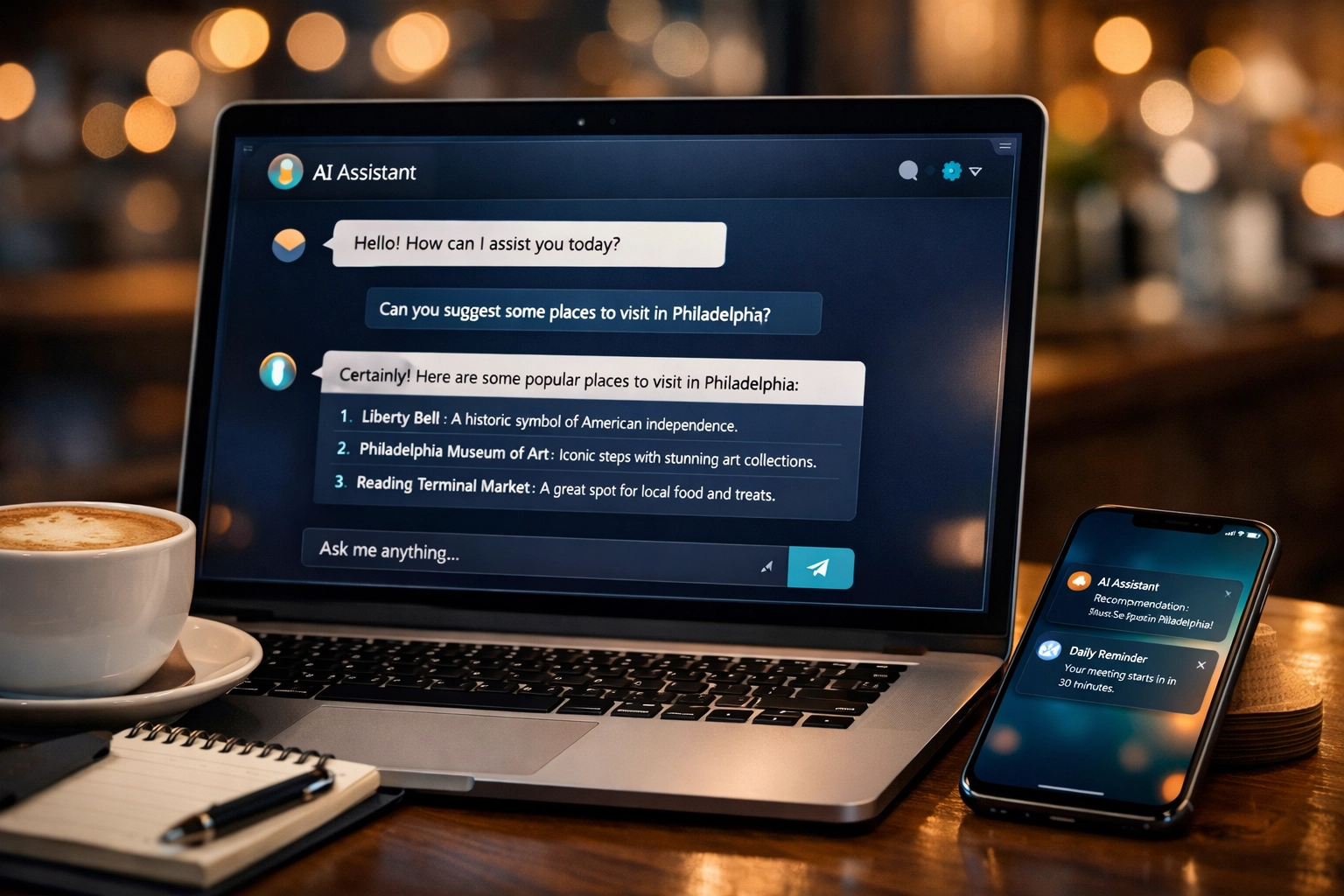
Start with the basics: AI-powered chatbots that actually understand questions and route visitors correctly. Not the annoying "I didn't understand that" bots from 2019: modern AI chat can handle natural language, answer common questions, and hand off to humans when needed.
AI-powered intake forms are another no-brainer. Instead of making customers fill out 30 fields, let them describe what they need in plain English. The AI extracts the relevant information, categorizes the lead, and feeds it directly into your CRM. Less friction means more conversions.
For content-heavy sites, AI personalization can show different messages to returning visitors versus first-timers, or tailor content based on what pages they've viewed. You're not creeping on customers: you're making their experience more relevant.
Want to see how AI automation can connect to your existing website? Check out our API integrations service: we help Philly businesses plug AI tools into their current setup without starting from scratch.
Backend & Infrastructure: Cloud-Native and API-First
Your backend doesn't need to be complicated, but it should be modern. Serverless providers like AWS Lambda or Cloudflare Workers mean you only pay for what you use and don't have to manage servers. For most small businesses, this is both cheaper and more reliable than traditional hosting.
A headless CMS (like Sanity or Strapi) separates your content from your frontend. This means you can update your site's look without touching content, or push the same content to your website, app, and email campaigns. It's flexibility you'll appreciate down the road.
API-first architecture might sound technical, but here's the practical benefit: when you want to connect your website to your CRM, booking system, or payment processor, it's plug-and-play instead of custom development hell.
Foundation-wise, solid hosting services matter: but they're no longer the star of the show. Modern hosting is fast, secure, and reliable, but the real magic happens in how your site is built on top of that foundation.
Performance Is Non-Negotiable
Let's talk numbers. Your Largest Contentful Paint (LCP): how fast the main content loads: should be under 2.5 seconds. Why? Because Google uses it as a ranking signal, and because visitors bounce if pages load slowly.
Here's how to hit that target:
- Compress and optimize images. Use modern formats like WebP.
- Lazy load anything below the fold. Don't load images users haven't scrolled to yet.
- Minimize third-party scripts. Every tracking pixel and widget slows you down.
- Use a Content Delivery Network (CDN). Cloudflare and similar services cache your site globally so it loads fast everywhere.
If you're adding 3D elements or fancy animations (and they're trending in 2026), make sure they're optimized. A beautiful hero animation that takes five seconds to load is a conversion killer.
This is where professional web development makes the biggest difference. Our website development team builds sites that look great AND load fast: because in 2026, you need both.
What to Avoid in 2026
Just as important as what to use is what NOT to use. Here's the short list:
Avoid over-reliance on heavy JavaScript frameworks for simple sites. If your site is mostly informational content, you don't need a complex React SPA. Server-side rendering or static site generation will serve you better.
Don't build on outdated platforms just because they're familiar. If your site is still running on a legacy CMS that requires constant patches and security updates, it's time to modernize. The maintenance costs alone will exceed the migration cost.
Skip "all-in-one" platforms that promise everything. They usually deliver mediocrity across the board. Best-of-breed tools that integrate well will always outperform a single bloated solution.
Don't ignore mobile performance. Over 60% of web traffic is mobile. If your site isn't blazing fast on a phone with a spotty connection, you're losing business.
The Philadelphia Small Business Playbook
Here's what we recommend for most local businesses:
-
Start with a performance-optimized foundation. Modern framework (Next.js or Astro), fast hosting, CDN in place.
-
Add AI where it removes friction. Chatbot for common questions, smart intake forms, automated follow-ups.
-
Integrate with your existing tools. Connect your website to your CRM, scheduling system, and communication tools. Make data flow automatically.
-
Prioritize Core Web Vitals. Fast sites rank better and convert better. Period.
-
Plan for maintenance. Modern stacks require less ongoing work, but they still need updates and monitoring.
You don't need to implement everything at once. Start with the foundation, add AI and automation strategically, and optimize performance continuously.
Your Next Move
The 2026 website stack isn't about chasing trends: it's about using proven, modern tools that make your business run smoother. Fast loading times, AI that actually helps, and systems that talk to each other.
If your current site feels slow, looks dated, or requires too much manual work, it's time for an upgrade. And if you're not sure where to start, let's talk. We help Philadelphia businesses build websites that work harder so you don't have to.
The tools exist. The technology is mature. The only question is: are you using them?
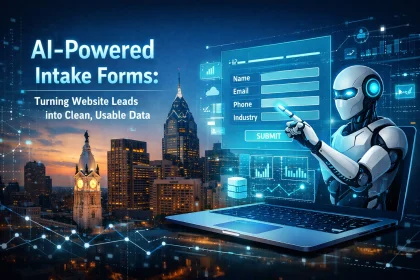
AI-Powered Intake Forms: Turning Website Leads into Clean, Usable Data
Let's talk about the most frustrating part of getting leads from your website: the mess that comes after someone hits submit. You know the drill. Someone fills out your contact form. You get the notification. You open it up and find half the fields are blank, the phone number is missing a digit, and the "tell us about your project" box just says "I need help." Now you're playing email tag for three days just to figure out what they actually want. It's 2026. We can do better than this. The Real Problem With Most Contact Forms Most website forms are dumb. They don't think, they don't adapt, and they definitely don't help you collect information you can actually use. They're just digital versions of a paper form somebody designed in 2015 and never looked at again. Every visitor sees the exact same questions regardless of whether they're a perfect fit or completely wrong for your business. The result? You get one of two scenarios: Scenario A: Your form is too short. You get plenty of submissions, but half are junk leads or missing critical details. Your team wastes hours qualifying people who should never have made it through...
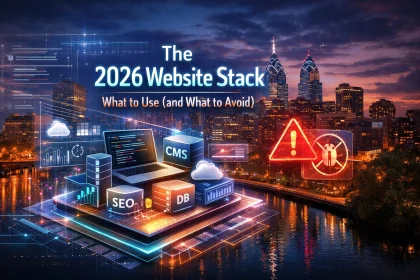
The 2026 Website Stack: What to Use (and What to Avoid)
If you've been running your business website on the same platform for the past five years, you're probably wondering: Is my tech stack still holding up, or am I falling behind? Good news: you're asking the right question. Bad news: the answer depends entirely on what you're currently using, and what you're trying to accomplish. In 2026, the website stack landscape has shifted. The tools that were cutting-edge in 2021 might now be slowing you down. And the platforms marketed as "all-in-one solutions" often create more headaches than they solve. Let's break down what actually works right now, what you should avoid, and how to think about your website as the operational backbone it's supposed to be. The Foundation: Speed, Flexibility, and AI Integration Your website stack is basically the collection of technologies that power your site, from what visitors see on the frontend, to how data flows behind the scenes, to how it connects with your CRM, email, scheduling, and everything else. In 2026, three things matter more than ever: Speed. Your site needs to load fast. Not just "good enough," but genuinely fast. Google's Core Web Vitals are still a ranking factor, but more importantly, slow sites...
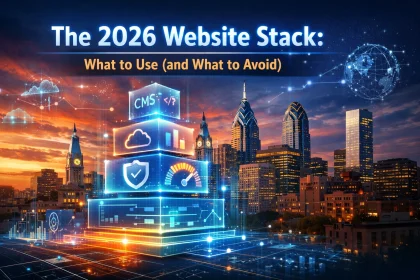
The 2026 Website Stack: What to Use (and What to Avoid)
Your website stack, the collection of technologies, tools, and frameworks that power your site, matters more than most business owners realize. Choose the wrong combination, and you're stuck with slow load times, clunky integrations, and a site that feels outdated before you've even launched. Choose wisely, and you've got a foundation that scales, performs, and actually helps your business grow. The problem? In 2026, there are more options than ever. And not all of them deserve your attention. This guide breaks down what's worth using in your website stack right now, and what you should skip entirely. Whether you're building from scratch or planning an upgrade, these decisions will shape how your site performs, how much you spend, and how well it supports your business goals. What Makes a Good Website Stack in 2026 Before we dive into specific tools, let's clarify what we're actually optimizing for. A strong website stack in 2026 should deliver: Speed , Pages that load in under 2 seconds Scalability , Room to grow without requiring a rebuild Integration-friendly architecture , Easy connections to CRMs, scheduling tools, payment systems, and marketing platforms SEO performance , Clean code, fast rendering, and search-engine-friendly structure Security ,...
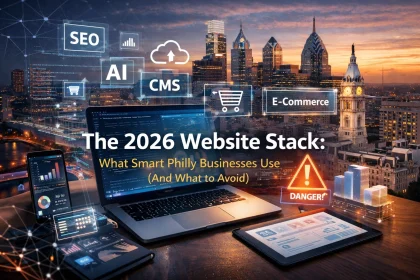
The 2026 Website Stack: What Smart Philly Businesses Use (And What to Avoid)
If you're running a business in Philly, your website isn't just a digital business card anymore. It's your operations hub, your lead generator, and often your best salesperson. But here's the thing: the tools and tech you choose to build it on can either set you up for growth, or lock you into expensive, frustrating limitations. So what are smart Philadelphia businesses actually using in 2026? And more importantly, what should you avoid like a pothole on Broad Street? Let's break down the modern website stack that actually works, and the outdated approaches that'll cost you time, money, and opportunities. What the Best Philly Businesses Are Building On The foundation of a smart website in 2026 isn't about picking the flashiest platform or the cheapest option. It's about building something that's scalable, secure, and designed to integrate with the tools you're already using. Responsive, Mobile-First Design (Non-Negotiable) More than 60% of your website traffic is probably coming from mobile devices. If your site doesn't look and function flawlessly on a phone, you're losing business every single day. Smart businesses are prioritizing responsive layouts that adapt seamlessly across devices, not separate mobile sites, not clunky zoomed-in desktop versions, but true...
The 2026 Website Stack: What to Use (and What to Avoid)
Look, choosing the right tech stack for your website in 2026 feels a bit like ordering off a menu written in a foreign language. There are acronyms everywhere, people throwing around framework names like they're trading cards, and everyone's got an opinion about what's "essential." Here's the truth for small businesses in Philly: you don't need the fanciest stack. You need one that works, loads fast, ranks well, and doesn't require a computer science degree to update. Let's cut through the noise and talk about what actually matters. Frontend: Where Your Visitors Actually Interact Your frontend is what people see and click. It needs to be fast, mobile-friendly, and frankly, not a pain to maintain. What to Use: Next.js has become the Swiss Army knife of web frameworks. It's built on React, handles server-side rendering beautifully (great for SEO), and gives you routing without the headache. If you're building a site with multiple pages, blog content, or anything that needs to rank on Google, this is your best bet. React still dominates for interactive dashboards and web apps. If your site has customer portals, real-time data displays, or complex user interactions, React's component-based approach makes development cleaner and faster....
AI Integrations & Web Design: What to Expect in 2026
If you've been putting off that website redesign, 2026 might be the year you stop procrastinating. Not because your current site is ugly (though it might be), but because the entire game has changed. Websites aren't static brochures anymore, they're intelligent systems that learn, adapt, and actually help you run your business. Let's talk about what's happening right now and what it means for your business. Your Website Is Getting Smarter (Whether You Like It or Not) Remember when having a contact form felt futuristic? Yeah, those days are long gone. In 2026, AI isn't just generating blog content or chatbot responses. It's fundamentally changing how websites behave. We're talking about sites that recognize returning visitors, remember their preferences, adjust content based on what they're interested in, and even predict what they need before they ask for it. This isn't sci-fi stuff: it's happening right now. According to recent industry data, over 51% of designers building AI products are creating "agentic systems" that can handle multi-step tasks without constant human oversight. Translation? Your website can do a lot more heavy lifting than it used to. For Philadelphia small businesses, this is huge. You're competing with companies that might have...

What Visitors Actually Expect From Your Website in 2026 (And How to Deliver It)
Your website isn't competing with other businesses in your industry anymore, it's competing with the best digital experience your visitor had all week. Whether that was ordering from Amazon, booking through OpenTable, or scrolling Instagram, those experiences set the bar. And in 2026, that bar is higher than ever. If your site feels slow, generic, or confusing, people bounce. They don't give you a second chance. They don't send a feedback email. They just leave and find someone who gets it right. So what do visitors actually expect now? And more importantly, how do you deliver it without needing a Fortune 500 budget? Let's break it down. Speed Isn't Optional Anymore, It's the Foundation Let's start with the obvious one: your website needs to be fast. Not "pretty fast." Not "fast enough." Actually fast. We're talking 2-3 seconds to load, max. Every extra second you add costs you real money. Studies show that even a one-second delay drops conversions significantly. People won't wait around, especially on mobile. But here's the thing, speed in 2026 isn't just about how quickly your homepage pops up. It's about: Smooth scrolling without jank or lag No layout shifts (nothing jumping around while the...
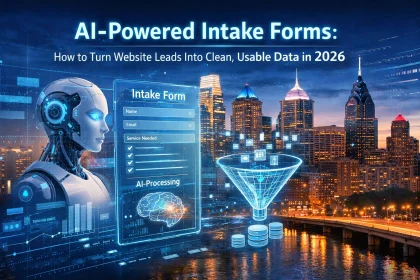
AI-Powered Intake Forms: How to Turn Website Leads Into Clean, Usable Data in 2026
You've got leads coming in through your website. That's the good news. The bad news? Half of them are incomplete. Phone numbers are missing. Email addresses have typos. And someone literally wrote "asdfgh" in the company name field because they were just testing the form. Your team spends hours each week cleaning up this mess, playing phone tag to fill in the blanks, and manually entering data into your CRM. By the time you actually reach out to a qualified lead, they've already hired someone else. Sound familiar? This is exactly the problem AI-powered intake forms solve in 2026. And if you're a Philadelphia small business still using basic contact forms, you're leaving money on the table. What Makes an Intake Form "AI-Powered"? Let's be clear: we're not talking about slapping a chatbot on your website and calling it a day. Real AI-powered intake forms do three critical things: Validate data in real-time so you never get garbage submissions Adapt questions dynamically based on what the lead tells you Route and process information automatically so it lands in the right place, ready to use Think of it like having a really smart receptionist who knows exactly what questions to...
The 2026 Website Stack: What Philadelphia Businesses Should Use (and What to Avoid)
Your website isn't just a digital business card anymore: it's your operations hub, your sales engine, and often your first impression with customers. But here's the thing: the technology powering that website matters more than most Philadelphia business owners realize. In 2026, the gap between a smart tech stack and a messy one isn't just about aesthetics. It's about speed, security, integration capability, and whether your website can actually grow with your business or becomes a bottleneck that needs rebuilding every two years. Let's cut through the noise and talk about what actually works for Philadelphia businesses right now: and what you should skip entirely. Why Your Stack Matters More Than Ever Think of your website stack as the foundation and framework of a house. You can have beautiful furniture (great design) and nice paint (good branding), but if the foundation is cracked or the wiring is outdated, you're going to have problems. The right stack in 2026 needs to do three things well: Perform fast on mobile and desktop without constant tweaking Integrate easily with your CRM, payment systems, and automation tools Scale gracefully when you add pages, traffic, or functionality The wrong stack? It'll slow you down,...