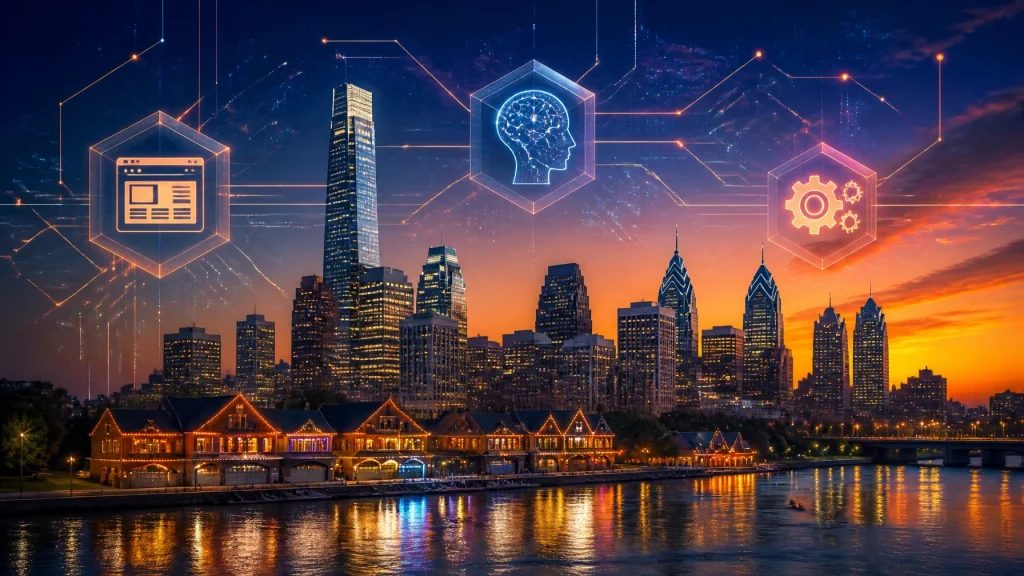
If you’re a small business owner in Philadelphia, you know the city is changing fast. From the tech hubs in University City to the storefronts in Fishtown, the way we do business in 2026 looks a lot different than it did even two years ago.
The "traditional" website: the one that just sits there like a digital brochure: is officially retired. In 2026, your website is either an active employee that books jobs and answers questions while you sleep, or it’s a liability that’s costing you leads.
Building a "stack" (the collection of software and tools that run your site) used to be something only developers talked about. But today, understanding your stack is the difference between a business that scales and one that gets stuck in manual data entry hell.
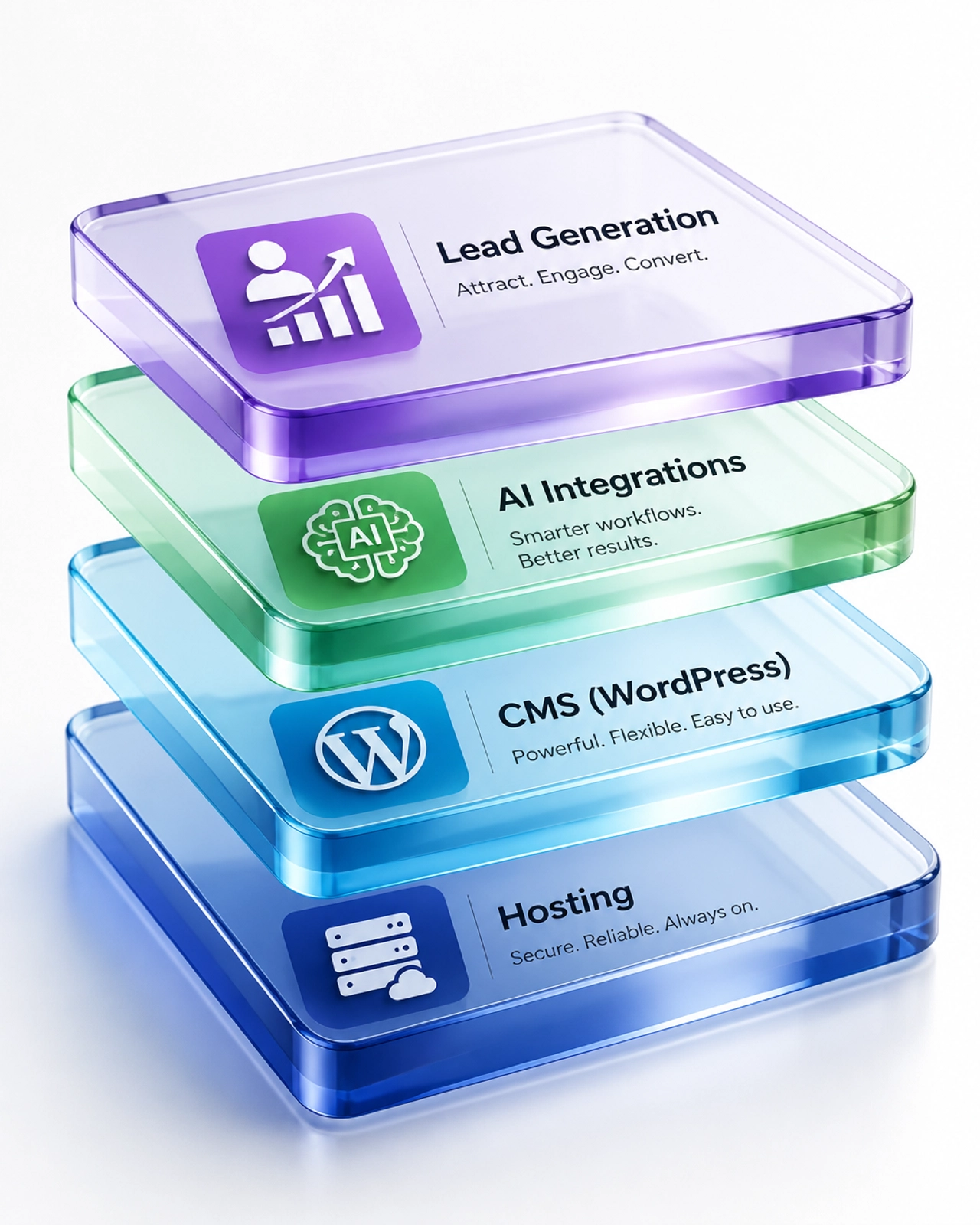
At BENT Enterprise, we’ve spent years refining what works for local businesses. Here is the definitive 2026 Philadelphia Web Design Stack: what you need to embrace, and what you should leave in the rearview mirror.
1. The Core Platform: Flexibility Over Everything
In 2026, the foundation of your website needs to be robust but flexible. While there are a million "all-in-one" builders out there, we still find that for 90% of Philadelphia small businesses, a professionally managed WordPress setup is the gold standard.
Why? Because in 2026, WordPress has fully embraced "Headless" capabilities and AI integration. It allows us to build Custom Web Design solutions that aren’t locked into a single proprietary ecosystem.
What to Use:
- WordPress with Block-Based Editing: It’s fast, secure, and allows for deep customization.
- Webflow (for Design-First Brands): If you’re a high-end boutique or a creative agency in Center City, Webflow offers unparalleled visual control.
What to Avoid:
- Cheap, Proprietary "Closed" Builders: Avoid the $10/month builders that don't let you export your data or integrate with modern AI tools. You’ll outgrow them in six months, and moving your content will be a nightmare.
2. The AI Layer: Moving From Chatbots to "Agents"
The biggest shift we’ve seen in 2026 is the death of the "dumb" chatbot. You know the ones: they just spit out a generic "How can I help you?" and then wait for you to type something.
Modern Philadelphia businesses are using AI Agents. These aren’t just chat boxes; they are integrated systems that have access to your calendar, your service list, and your FAQ.
What to Use:
- Agentic AI Integrations: These tools can actually do things. A visitor asks, "Do you have any openings for a roof inspection in South Philly on Tuesday?" and the AI checks your actual schedule and books the slot. This is where AI Automation truly pays for itself.
- Knowledge-Base Trained AI: Your AI should be trained specifically on your business data, not just general internet knowledge.
What to Avoid:
- Generic, Unmonitored Chatbots: If your AI is hallucinating or giving customers the wrong pricing because it hasn't been updated since 2024, turn it off. It’s hurting your brand.
3. Local SEO: The AI-Native Map Pack Strategy
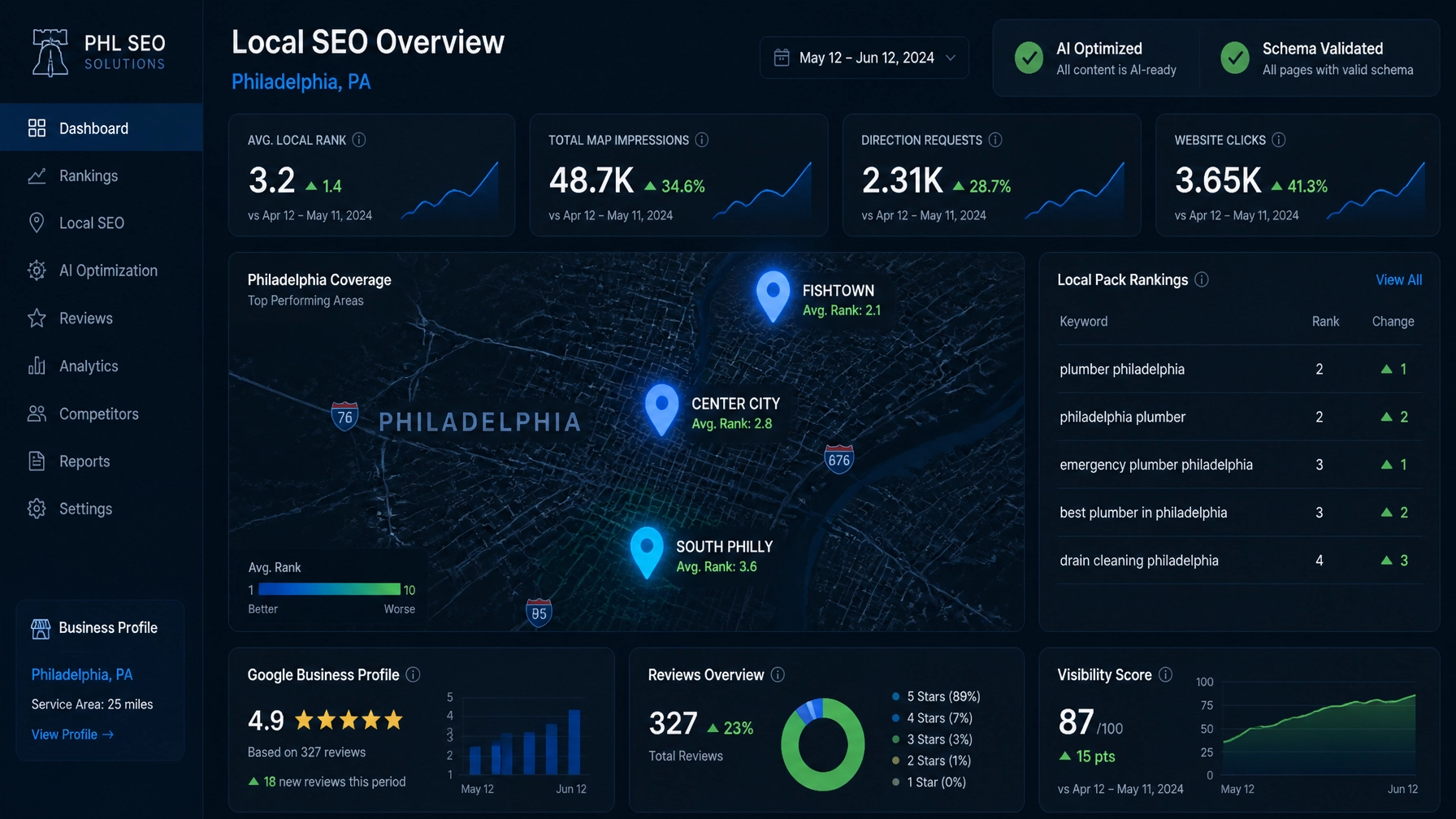
If you aren't visible in the "Map Pack" (the top three local listings on Google), you don't exist to most Philadelphians. But in 2026, SEO isn't just about keywords; it's about Search Intent Optimization.
Google and other AI search engines are now looking for "Proof of Locality" and "Social Proof." Your stack needs to handle this automatically.
What to Use:
- Automated Schema Markup: This is "code for robots" that tells search engines exactly where you are and what you do. We include this in all our Local SEO packages.
- Dynamic Neighborhood Pages: If you serve Manayunk, Chestnut Hill, and Northeast Philly, you need pages that mention those areas: but they need to be high-quality, not just keyword-stuffed templates.
What to Avoid:
- Buying Backlinks: In 2026, the algorithms are smarter than ever. A hundred "spammy" links from random websites will get your site shadow-banned faster than a SEPTA delay on a Monday morning.
4. The Integration Layer: The "Glue" of Your Business
Your website shouldn't be an island. It should be connected to your CRM (Customer Relationship Management), your email marketing, and your accounting software.
What to Use:
- Webhooks and API-First Tools: Instead of manual data entry, use tools like Zapier or Make to "glue" your site to your business tools. When a form is filled out on your site, it should automatically create a lead in your CRM and send a personalized (but not robotic) text message to the prospect.
- Direct CRM Integration: Whether you use HubSpot, Salesforce, or a industry-specific tool, your website should feed it clean data in real-time.
What to Avoid:
- Manual Lead Tracking: If you are still getting "Contact Form" emails and then manually typing that info into a spreadsheet, you are losing money. Leads go cold in minutes, not hours.
5. Performance and Hosting: The Invisible Foundation
We mentioned hosting only as a minor element because, in 2026, "good enough" hosting isn't a competitive advantage: it's a prerequisite. If your site takes more than two seconds to load, the average user is gone.
What to Use:
- Edge Delivery Networks: Your site's files should be stored on servers close to the user. For a Philly business, that means having your data cached in regional data centers to ensure lightning-fast speeds.
- Automated Security Monitoring: With AI-driven cyber threats on the rise, your stack must include real-time threat detection and daily backups.
What to Avoid:
- $2/Month "Shared" Hosting: You get what you pay for. Cheap hosting is slow, insecure, and prone to downtime. It’s the digital equivalent of setting up shop in a building with no locks and a leaky roof.
The "Human-Made" Factor: Don't Lose Your Soul
Here is a 2026 secret: As AI becomes more common, humanity becomes more valuable.
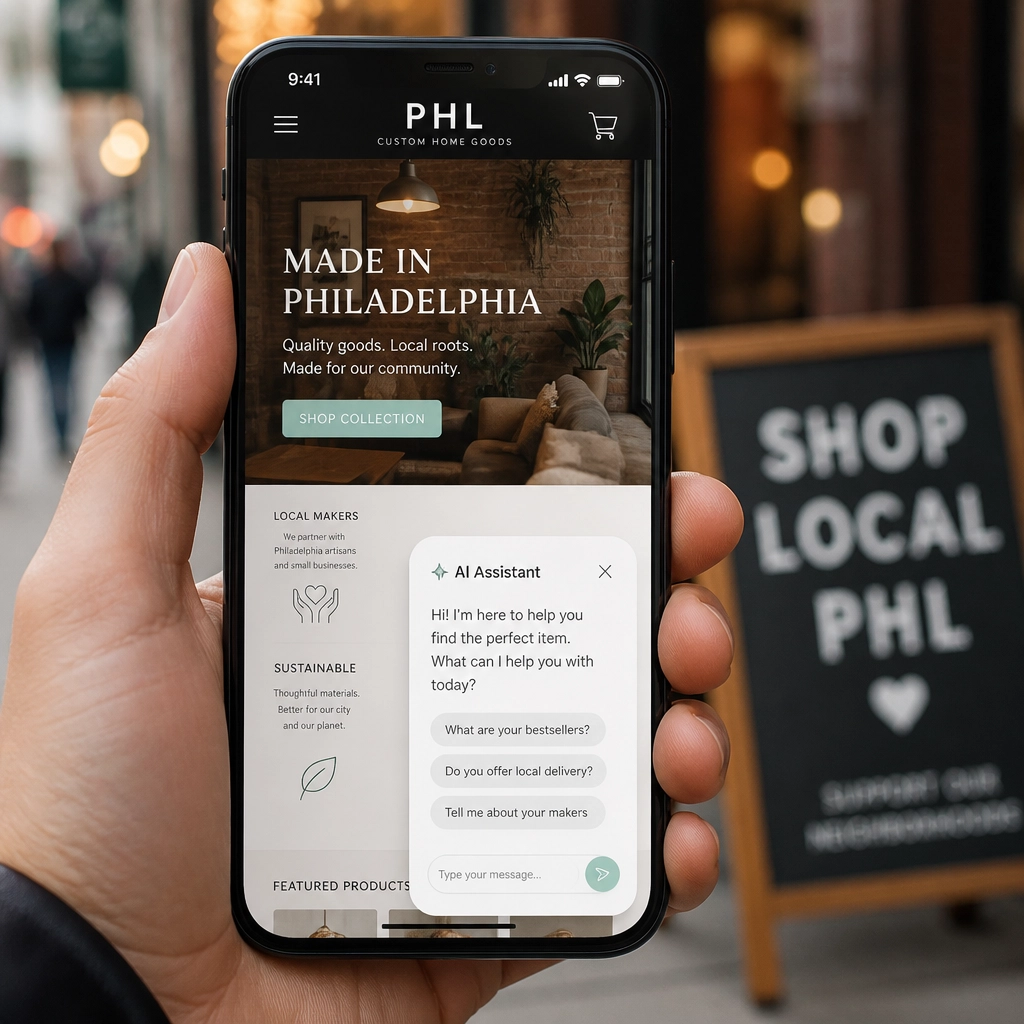
While your stack should be powered by automation and AI, your design and your voice should be unmistakably you. People in Philadelphia value authenticity. They want to know there’s a real team behind the digital curtain.
What to Use:
- Real Photography: Skip the stock photos of people in suits. Use real photos of your team, your office, and your work in the city.
- Custom Copywriting: AI can help draft, but a human should always provide the final "vibe check."
What to Avoid:
- The "AI-Generated" Look: We’ve all seen it: the overly polished, slightly "uncanny valley" images and the robotic, repetitive text. It screams "lazy" to a potential customer.
Conclusion: Build for 2026, Not 2020
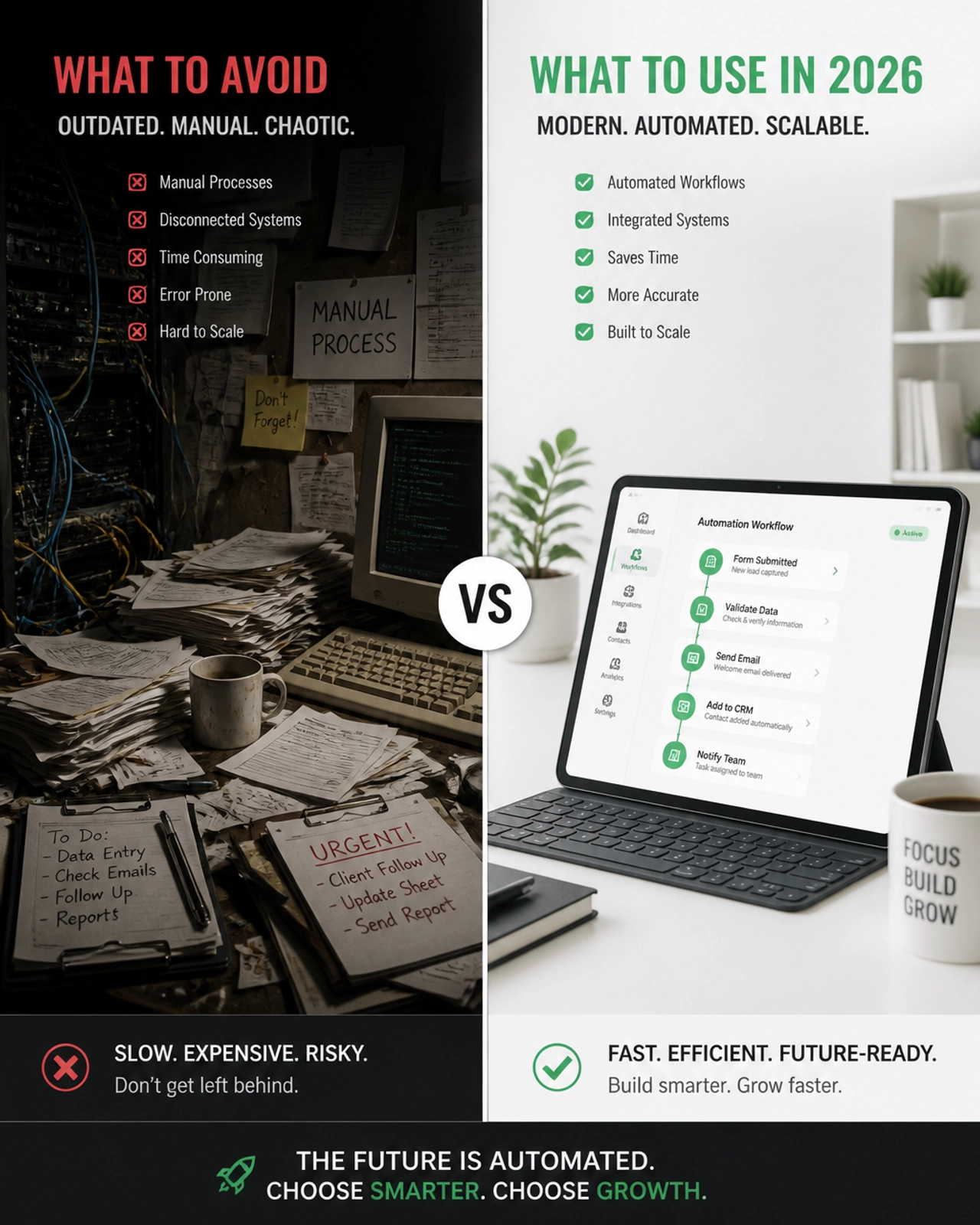
The Philadelphia market is too competitive to rely on an outdated web stack. By combining a flexible core like WordPress, the power of AI Automation, and a rock-solid Local SEO strategy, you can turn your website into your most productive employee.
Ready to upgrade your stack and stop leaving leads on the table? We’re here to help you navigate the tech so you can get back to running your business.
Contact BENT Enterprise today to start your 2026 upgrade.