
7 Mistakes You’re Making with Website Architecture (And Why the Worst Web Hosting Services are No. 1)
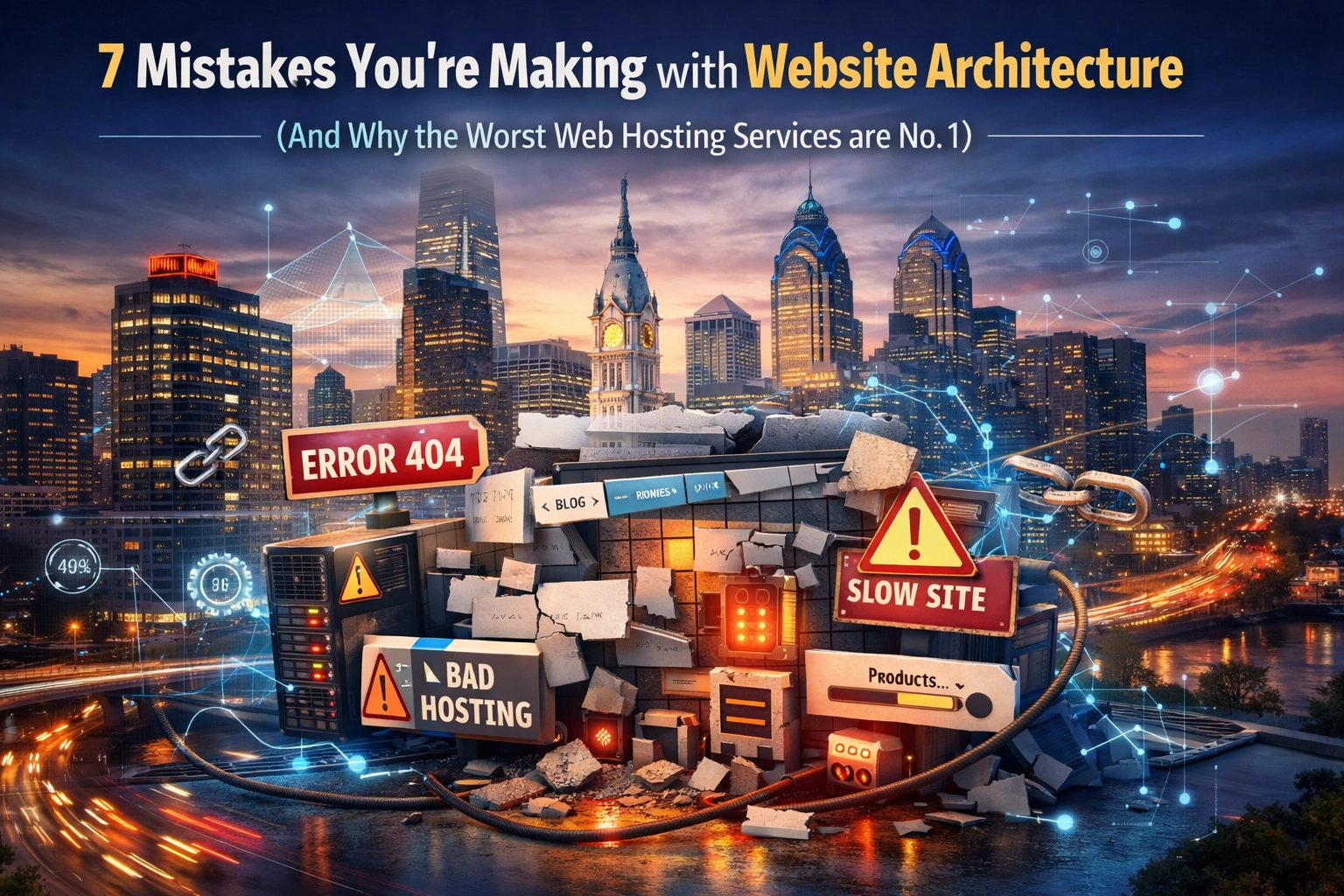
If you’re running a business here in Philadelphia: whether you’re managing a law firm in Center City, a construction crew in Fishtown, or a growing boutique in Manayunk: your website is no longer just a digital business card. In 2026, your website is your hardest-working employee. It’s your salesperson, your customer service rep, and your data analyst all rolled into one.
But here’s the cold, hard truth: most small business websites are built on a shaky foundation. I’m Francis Burnet from Brown Paper Analytics, and working with the team at BENT Enterprise, I’ve seen time and again how poor website architecture quietly kills growth. You might have the best AI tools or the slickest branding, but if the structural bones of your site are broken, you’re leaving money on the table.
Let’s dive into the seven most common architectural mistakes we see and how you can fix them to stay ahead of the curve.
1. The Foundation Flaw: Why "Cheap" Hosting is Your Biggest Mistake
You might be surprised to see hosting at the top of an architecture list. Most people think of hosting as a utility, like electricity. But in 2026, hosting is the bedrock of your site’s performance. The "No. 1" mistake isn't just a technical glitch; it's a strategic failure.
If you’re using a bargain-bin web host, you aren't just saving $10 a month: you’re handicapping your entire tech stack. Modern website architecture relies heavily on AI Automation Systems and real-time data processing. If your server is slow or lacks the "muscle" to handle concurrent API calls, your expensive AI integrations will lag, time out, or fail entirely.
Cheap hosting often means shared environments where a spike in someone else’s traffic slows your site to a crawl. In Philadelphia’s competitive market, a three-second delay is the difference between booking a new client and watching them click over to a competitor. Before you build the house, make sure the land isn't a swamp.
2. The "Big Swamp" (A Total Lack of Structure)
The research is clear: many business owners treat their website like a junk drawer. You keep adding pages: an "About" page here, a "Service" page there, a blog post from 2022: without a central organizing principle.
We call this the "Information Swamp." When a visitor (or a search engine bot) arrives at your site, they need to see a logical flow. Without it, they get overwhelmed and bounce. Your architecture should follow a "silo" or "cluster" approach. For example, if you offer Custom Web Design, all related content: like UX tips, mobile optimization, and portfolio pieces: should be organized under that main pillar.

3. Disconnected AI Integrations
It’s 2026, and everyone wants AI on their site. But the mistake we see most often is "bolting on" AI rather than integrating it. You might have a chatbot from one provider, a lead form from another, and an email tool that doesn't talk to either.
A sound website architecture ensures that data flows seamlessly from your front-end forms into your backend systems. When a lead enters their info, it should trigger an automated workflow that updates your CRM and sends a personalized follow-up. If your architecture doesn't support these AI Services, you’re just creating more manual work for yourself.
4. Navigation Nightmares and Confusing Labels
Philly business owners are straight shooters, and your website navigation should be too. A major architectural mistake is trying to be "clever" with menu labels. Using terms like "Our Journey" instead of "About Us" or "Solutions Center" instead of "Services" confuses users.
The goal is to reduce "cognitive load." Your main menu should be limited to 5–7 essential elements. Anything more, and you’re suffering from "Extreme Polyhierarchy": too many choices that lead to decision paralysis. Keep your navigation clean, and make sure your Local SEO Services are easy to find so Google can reward you with a spot in the local Map Pack.
5. Ignoring the Visual Hierarchy
Architecture isn't just about links; it’s about how the eye moves across the page. A cluttered layout is an architectural failure. If your headlines, Call-to-Action (CTA) buttons, and body text all have the same visual weight, the visitor won't know where to look.
In 2026, visitors scan; they don’t read every word. You need a clear visual hierarchy:
- A-Level: Your main value proposition (Headline).
- B-Level: Your primary CTA (e.g., "Get a Quote").
- C-Level: Supporting evidence and benefits.
Strategic use of white space and consistent grid layouts aren't just "design choices": they are functional requirements for a site that converts.
6. Search and Structure are Not Integrated
This is a technical SEO trap. Many sites have great content but poor internal linking. If your "Search" results page doesn't look like the rest of your site, or if a user lands on a deep blog post and has no way to navigate back to the relevant service category, your architecture is broken.
Every page on your site should have a "parent." If you have a page about "Web Design for Law Firms," its parent should be your main Custom Web Design page. This creates a "breadcrumb" trail that helps both users and AI crawlers understand the hierarchy and importance of your content.
7. The "Dead End" Lead Path
The final mistake is building an architecture that ends at the "Submit" button. What happens after a customer fills out a form on your site? If they just see a generic "Thank You" message and then wait three days for a call, your architecture has failed.
In a modern 2026 workflow, the architecture should include automated response paths. This could be an AI-driven calendar invite, a downloadable resource that keeps them engaged, or an immediate SMS notification to your sales team. Your website should be a loop, not a straight line with a dead end.
Why Philadelphia Businesses Need to Modernize Now
The Philly market is unique. We value authenticity and efficiency. Whether you're in South Philly or the Main Line, your customers expect a website that works as hard as they do. By fixing these architectural mistakes: starting with moving away from bottom-tier hosting: you set the stage for advanced AI Automation Systems that can actually grow your revenue while you sleep.
How BENT Enterprise Can Help
At BENT Enterprise, we don't just build "pretty" websites. We build operational engines. We look at your website architecture through the lens of 2026 technology, ensuring that your hosting, your structure, and your AI integrations are all working in harmony.
If you’re worried that your current site is an "Information Swamp" or that your hosting is holding you back, let’s chat. We specialize in helping Philadelphia small businesses streamline their operations through smart design and automation.
Ready to clean up your site’s architecture? Contact us today for a strategy session.
Key Takeaways for Your 2026 Website:
- Prioritize Hosting: Don't let a cheap server be the bottleneck for your AI and speed.
- Silo Your Content: Move away from the "junk drawer" approach and organize by service pillars.
- Integrate, Don't Bolt-On: Ensure your AI tools communicate with your CRM.
- Simplify Navigation: Use clear, standard labels that even a distracted user can understand.
- Focus on the Path: Architecture should lead the user toward a conversion, not a dead end.
Your website is your most valuable asset. Don't let poor architecture turn it into a liability. Fix the foundation, clear the swamp, and start building for the future.