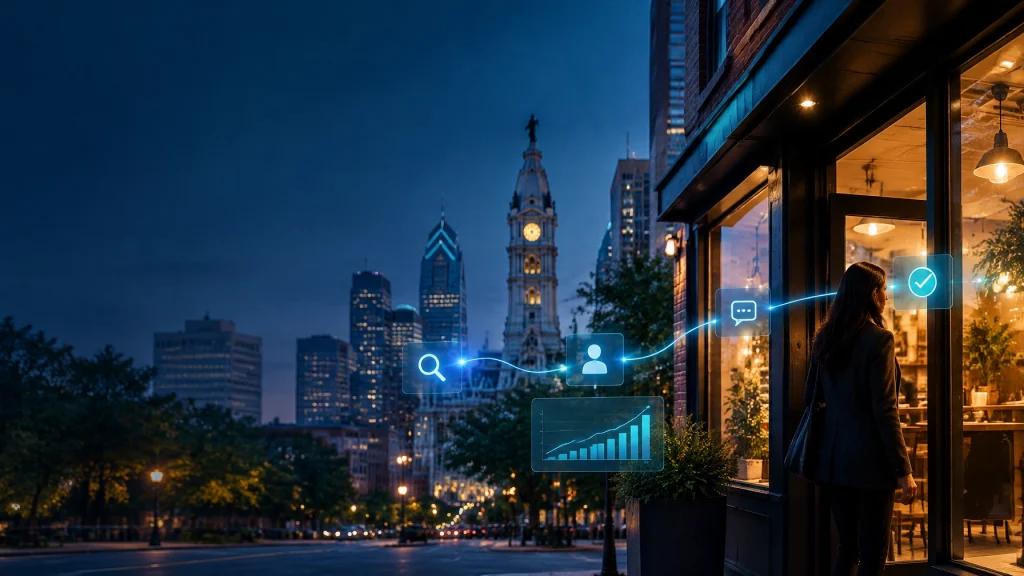
For a Philadelphia small business, advertising success isn’t measured by how many people click an ad. It’s measured by whether the right local customers call, submit a useful inquiry, or book a job. That’s why google ads for small business works best when the website and follow-up process are ready to turn paid visits into real conversations.
When the site is slow, the landing page is vague, or nobody responds promptly, even well-targeted ads can waste budget. The opportunity in 2026 is to connect paid search, conversion-focused web design, and practical AI integrations into one customer journey.
Why ad budgets leak after the click
A potential customer searching for a plumber in South Philly or a tax professional in Center City has a specific need. If the ad promises a clear service but sends that person to a generic homepage, they have to work to find the right information. Many won’t.
Other common leaks are less visible: a page takes too long to load on a phone, the offer is unclear, or a form submission lands in an unattended inbox. In each case, the ad may be doing its job. The breakdown happens after the click.
A focused landing page should continue the promise made in the ad. If the ad promotes emergency service, the page should explain what help is available, where it’s offered, and how to request it. Strong PPC advertising services connect campaign targeting and messaging to the page experience and useful conversion tracking.
Build a landing page that’s ready to convert
A conversion-ready page doesn’t need to be complicated. It needs to make the next step obvious and easy.
- Load quickly. Keep images and scripts under control, especially for visitors on mobile connections.
- Lead with one offer. Make the page about one service or action, not every product your business sells.
- Design for phones first. Use readable text, easy-to-tap buttons, and a prominent call option when phone leads matter.
- Show local proof. Mention the neighborhoods or service areas you actually cover. Add relevant reviews, credentials, or examples that help nearby customers feel confident.
- Make contact simple. Ask only for information you need to respond, and tell people what happens after they submit the form.
A page for a Manayunk contractor, for example, should make the service, coverage area, and request-a-quote action immediately clear. It shouldn’t make someone hunt through the navigation. For a stronger technical foundation, explore web development services.

Tie ads to AI, without making the experience feel robotic
AI can help recover opportunities that would otherwise slip through the cracks. The goal isn’t to add technology for its own sake; it’s to reduce delays and make lead handling more consistent.
An AI chatbot can answer common questions from an ad-click visitor, explain basic service details, and collect contact information when your team is busy or offline. It should have clear limits and a handoff to a person when a question needs judgment or a detailed estimate.
AI-supported intake can also organize incoming requests. A form might collect the service needed, ZIP code, urgency, and preferred contact method. An automation can check that the data is complete, route the lead to the right person, and send a prompt acknowledgment. This helps the business respond sooner without forcing staff to copy information between tools.
With consent and appropriate privacy disclosures in place, real website behavior can also inform remarketing audiences. For example, you might distinguish visitors who viewed a particular service page from people who started but didn’t finish an inquiry. Build those audiences around meaningful actions, respect users’ privacy choices, and avoid treating every visitor as a lead.
Explore AI automation systems to see how lead capture, routing, and follow-up can work as a connected process.

Target Philadelphia intent, not just a broad map
Local campaigns work best when geography and customer intent match your real service area. Use relevant location and service terms, such as “roof repair South Philadelphia” or “Center City bookkeeping,” when those phrases accurately describe what you offer. Separate campaigns or ad groups by service and area when that makes it easier to control budgets and tailor landing pages.
Set location targeting around the places you can serve, and review where ad interactions are coming from as the campaign runs. Google’s location targeting guidance explains the available geographic options. For service-area businesses, confirm that your Google Business Profile details and website communicate consistent services, locations, hours, and contact information. Local SEO services can help strengthen that local foundation alongside paid campaigns.

Measure calls, forms, and booked jobs, not just clicks
Clicks show that someone visited. They don’t tell you whether that visit helped the business.
Track meaningful outcomes separately: qualified phone calls, successfully submitted forms, and completed bookings. If possible, connect those leads to the next step, such as a scheduled estimate or completed job, so you can see which campaigns are creating business value. Google explains how to measure phone calls from ads and websites and track website actions as conversions.
Review lead quality as well as volume. A campaign that generates many inquiries outside your service area may be less valuable than one producing fewer, better-fit prospects.
Avoid these common sources of wasted spend
- Sending every paid visitor to the homepage instead of a relevant service page.
- Running ads without checking that calls, forms, and bookings are tracked correctly.
- Using broad keywords that attract searches unrelated to your offer or service area.
- Collecting inquiries without a clear process for responding and routing them.
- Building remarketing audiences without appropriate notice, consent, and privacy controls.
Ad performance depends on the whole system: campaign, page, tracking, and follow-up. That system also needs to stay healthy over time. Read Why Website Maintenance Services Are the Backbone of Philadelphia Business Growth and What a Platform and Hosting Consultation Should Decide for Philadelphia Businesses for related guidance.
Make every paid click work harder
Google Ads can bring local prospects to your door, but your website and follow-up process determine what happens next. A fast, focused landing page, accurate Philadelphia targeting, thoughtful AI automation, and reliable conversion measurement give you a clearer way to improve results and spend with purpose.
Want to connect your ads, website, and lead handling? Contact BENT Enterprise to plan your next step.