
Series: AI Integrations & Web Design 2026 · Category: AI Integrations
A beautiful website can still leave a business owner wondering where the leads are. The problem often isn’t how the site looks. It’s that the site has no clear offer, no obvious next step, or no reliable way to track what happens after someone clicks.
A lead generation website is more than an online brochure. It’s a connected system that helps the right people understand your value, get in touch easily, and receive a timely response. For Philadelphia businesses, that system should connect the website experience with local search, mobile-friendly contact options, and a follow-up process your team can actually manage.
Why attractive websites sometimes fail to generate leads
A visitor can land on a polished page and still leave without taking action. Common reasons include:
- No clear offer: The page describes the business but doesn’t explain what the visitor can get or why they should act now.
- No path forward: Calls to action are missing, hard to find, or compete with too many other options.
- No tracking: Forms, calls, bookings, and chat inquiries aren’t measured consistently, so it’s difficult to know what’s working.
A useful web page answers three questions quickly: Is this for me? Can I trust this business? What should I do next? If the answers are buried, local visitors may simply move on to another result.
The building blocks of a lead-generating website
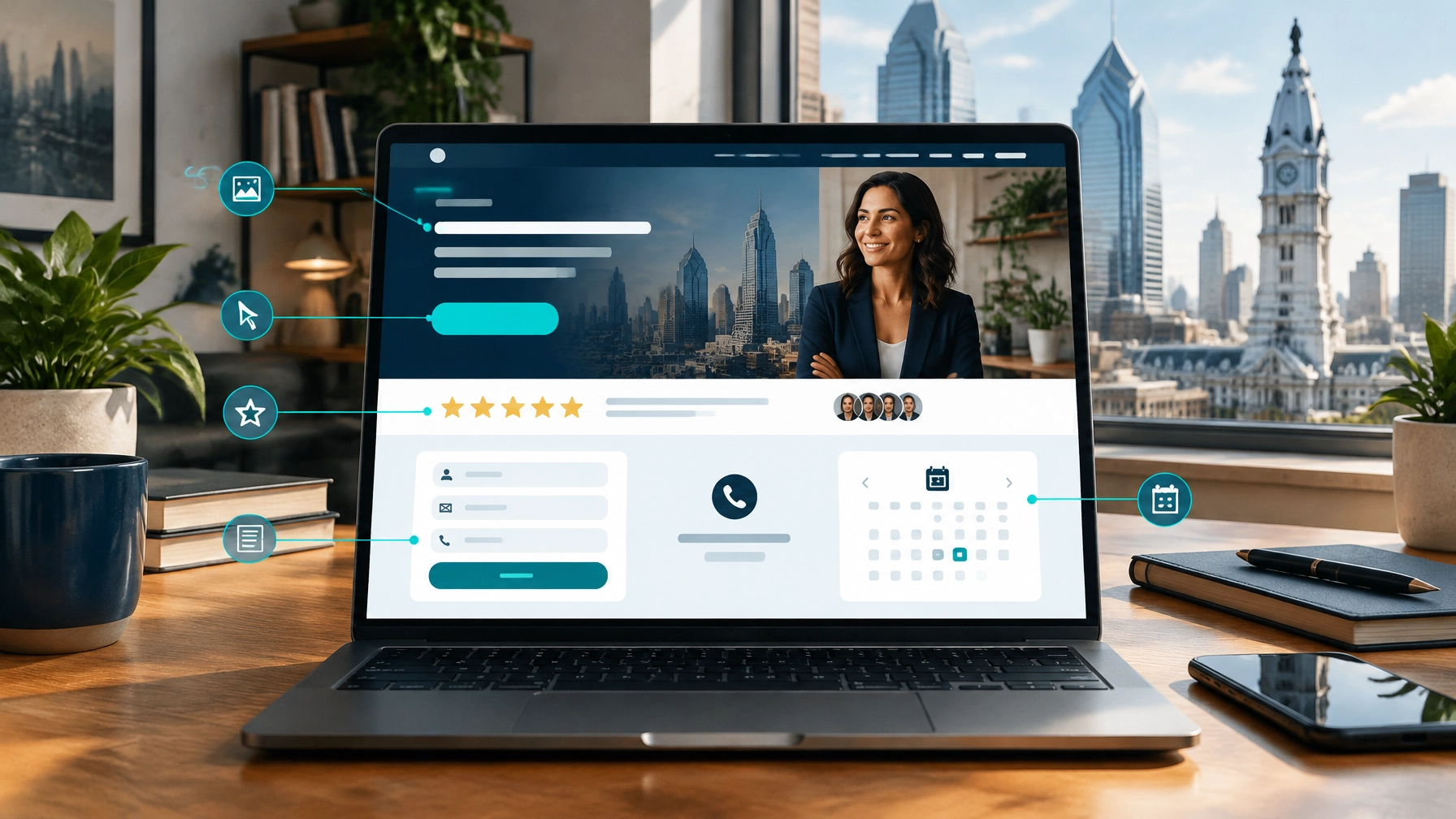
Start with a clear, relevant offer near the top of the page. State what you do, who you help, and where you serve, for example, Philadelphia and the nearby communities your business genuinely covers. Pair that message with one prominent primary action, such as “Request a quote,” and an easy-to-find phone option.
Then support the decision with trust signals: genuine customer reviews, credentials, relevant project examples, service-area information, and clear expectations about what happens after someone reaches out. Place proof near the moments where a visitor might hesitate, rather than hiding it on a separate page.
Make the next step simple. A short form should ask only for the details your team needs to start a conversation. Offer alternatives for people who prefer to call or book online. On phones, use readable text, easy-to-tap buttons, autofill-friendly forms, and a visible click-to-call option. A mobile visitor shouldn’t have to pinch, hunt, or fill out a lengthy questionnaire just to contact you.
Finally, give every key page a conversion goal. A service page might encourage a quote request; a consultation page might invite a booking. One clear goal helps visitors act, and helps you evaluate whether the page is doing its job.
Where AI integrations fit in
AI is most useful when it helps your business respond consistently, not when it creates another disconnected widget. A website assistant can acknowledge an inquiry after hours, answer approved frequently asked questions, and collect basic details. It should also make it easy to reach a person, especially when a question is complex or urgent.
AI-assisted intake can ask a few relevant questions (such as service needed, location, timing, or project type) then organize the information for your team. From there, an integration can route the lead to the right person, send an alert, create a CRM record, and start an appropriate follow-up sequence.
That matters because a lead left waiting is a lead at risk. Research published by Harvard Business Review found that companies contacting online leads within an hour were substantially more likely to qualify them than companies that waited longer. The practical lesson is straightforward: make it easy to respond promptly, and define who follows up when the team is busy.
AI should support that process, not pretend to be a human or make promises the business can’t keep. Set clear handoff rules, keep customer data moving to the right place, and review automated messages to make sure they sound helpful and accurate.

Connect local search to the contact path
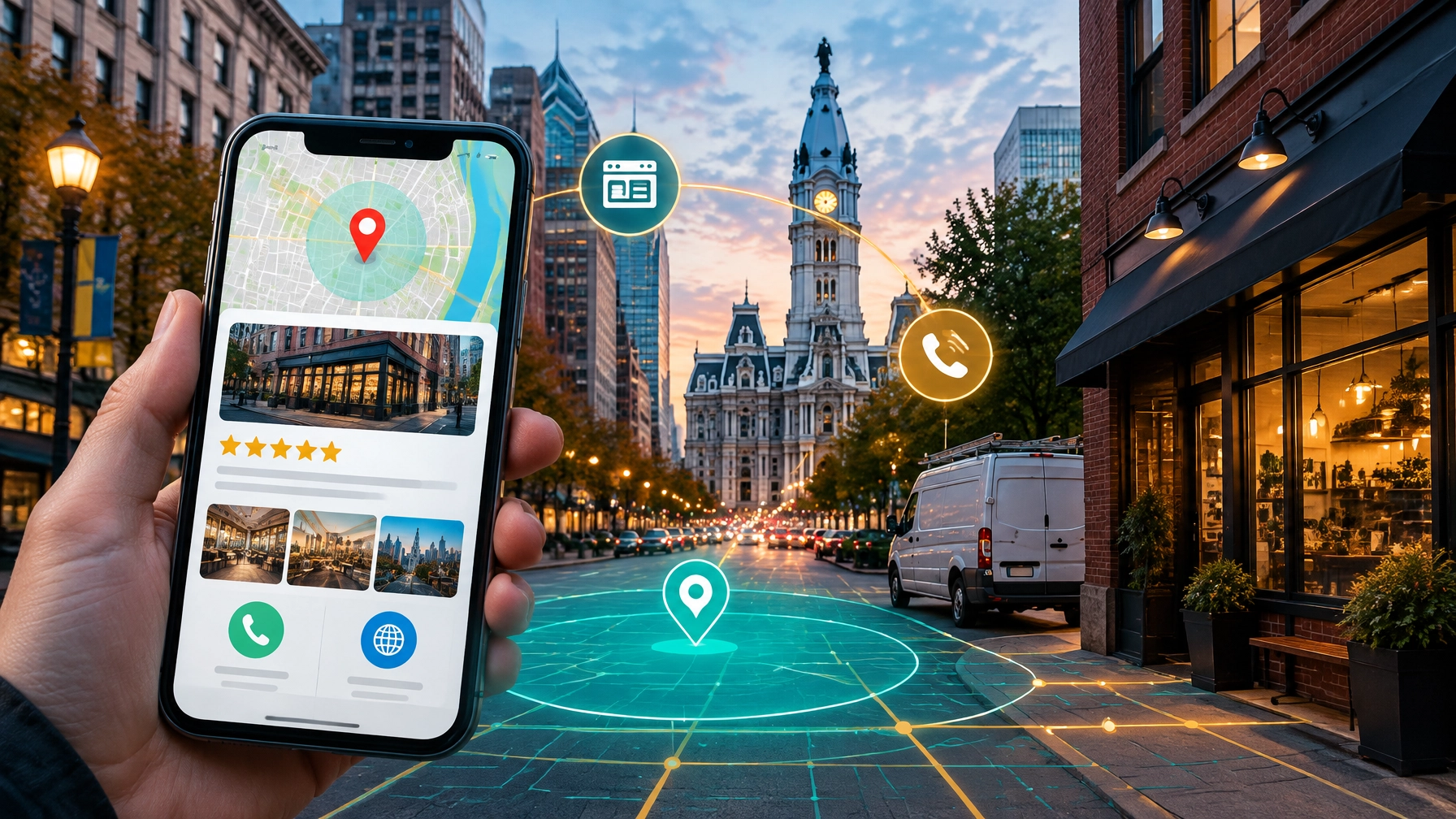
Philadelphia customers may discover your business through Google Maps or a local search before they ever visit your homepage. Your Google Business Profile and website should work together: keep business details and service areas accurate, link to the most relevant page, and make the next step (call, booking, or inquiry) obvious.
A visitor who finds you while searching for a specific service shouldn’t have to dig through a generic homepage to figure out whether you provide it. Send local searchers to a useful page that reflects what they’re looking for and gives them a direct way to contact you.
BENT’s Local SEO Services connect local visibility with the website’s trust signals and conversion path. For profile-specific improvements, explore Google Business Page Optimization.
What should you measure?
Traffic alone doesn’t tell you whether the site is producing useful opportunities. Track a small set of outcomes you can act on:
- Conversion rate: What share of visitors complete a desired action?
- Cost per lead: How much are you spending to generate inquiries from each channel?
- Speed to lead: How long does it take for a new inquiry to receive a response?
- Forms versus calls: Which contact method brings more qualified prospects?
- Lead quality: Which sources and pages lead to booked appointments or customers?
Count calls, forms, bookings, and chat inquiries separately where possible. A spike in form submissions isn’t automatically a win if those inquiries aren’t a fit, or if nobody follows up.
What a BENT build should include
At BENT Enterprise, a lead-focused build should bring together the design, customer journey, and operational handoffs, not just a fresh visual layer. That means a clear offer and conversion goal for each page, a mobile-first experience, visible trust signals, accessible contact paths, and measurement for the actions that matter.
Where it makes sense for the business, the website can also connect intake and follow-up with CRM or other tools, with clear routing and a human escalation path. Our Custom Web Design Services focus on tailored, mobile-friendly sites built around business goals. For workflow connections, learn more about AI Automation & Integrations.
Want to see how related ideas fit together? Read Why Website Design Philadelphia Should Be Your Small Business’s Smartest Investment and What Custom Web Design in Philadelphia Should Include in the AI Era.
A quick website check you can do today
Open your website on your phone and ask:
- Can I tell what this business offers and where it serves within a few seconds?
- Is there a clear next step near the top of the page?
- Can I call, book, or send a short inquiry without friction?
- Does the page show real reasons to trust this business?
- Can the team tell where an inquiry came from, and who should respond?
- Is there a plan for leads that arrive outside business hours?
If you answered “no” to several, that’s a good place to start. Pick one important page and improve its offer, contact path, or follow-up before adding more tools.
Frequently asked questions
What is a lead generation website?
It’s a website designed to turn relevant visits into measurable inquiries (such as calls, forms, bookings, or qualified chat conversations) and help the business follow up.
Does a small business need AI on its website?
Not necessarily. Start with the workflow that’s causing delays or missed inquiries. AI can be useful for intake, acknowledgment, routing, and follow-up when it’s configured with clear human handoff rules.
Should every page have the same call to action?
No. Each page should have a goal that fits the visitor’s intent. A service page may invite a quote request, while a consultation page may focus on scheduling.
How can I tell if my site is generating quality leads?
Track actions by source and page, then compare inquiries with qualified conversations, bookings, and customers. That gives you a more useful picture than traffic or form counts alone.
Your website should make it easier for the right Philadelphia customer to find you, trust you, and take the next step, and easier for your team to respond. If you’re ready to turn a brochure-style site into a more connected lead system, contact BENT Enterprise to talk through your website and AI integration priorities.