

For Philadelphia online stores, ecommerce SEO services should deliver more than a monthly rank report: they should improve how shoppers discover products and help turn non-brand organic search into measurable revenue.
Meta description: Learn what ecommerce SEO services should deliver for Philadelphia online stores, from technical fixes and AI workflows to revenue-focused reporting.
What should ecommerce SEO services actually include?
A strong engagement connects four kinds of work: technical foundations, buyer-intent mapping, useful merchandising content, and measurement tied to sales. It should also include implementation, or a clear, accountable handoff to the people who can ship changes. If you are weighing providers right now, Ecommerce SEO Services from BENT Enterprise shows how those four pieces fit together for a Philadelphia catalog store.
The goal isn’t simply to publish more pages. It’s to help the right product or category show up when a potential customer is searching, answer their questions, and make buying straightforward.
1. A technical foundation built for your catalog
Your provider should review how categories and products are organized, then address the issues that make important pages difficult to crawl, index, or use. That means a deliberate policy for faceted navigation, canonical URLs, duplicate product variants, pagination, XML sitemaps, robots directives, and crawl budget, not a blanket “index everything” approach.
Speed matters across the shopping journey, too. Ask for mobile performance checks on product detail pages (PDPs), product listing pages (PLPs), and cart and checkout flows. Google’s Core Web Vitals guidance offers a useful reference for assessing loading, responsiveness, and visual stability.
2. Search intent mapped to the right page
Category pages should serve shoppers comparing or looking to buy. Guides and buying content should address earlier research. A provider should map queries to the best page type, then strengthen the connections between relevant categories, guides, and products through internal links.
Product and offer structured data should also reflect visible, up-to-date product details, including price and availability. Proper product markup can make pages eligible for enhanced search appearances, but it does not guarantee them. See Google’s product structured data guidance.
3. Merchandising content that removes doubt
Good SEO copy helps customers make a decision, not just search engines understand a page. Category descriptions, comparisons, and product details should address real pre-purchase questions: materials, sizing, fit, compatibility, shipping, returns, lead times, and stock.
That’s where Custom Web Design Services can support SEO: page structure and shopping experience should make useful information easy to find without burying products under generic copy.

Where AI integrations can improve the work
AI is most useful when it helps a team understand customers and maintain accurate product information, not when it produces unchecked pages at scale.
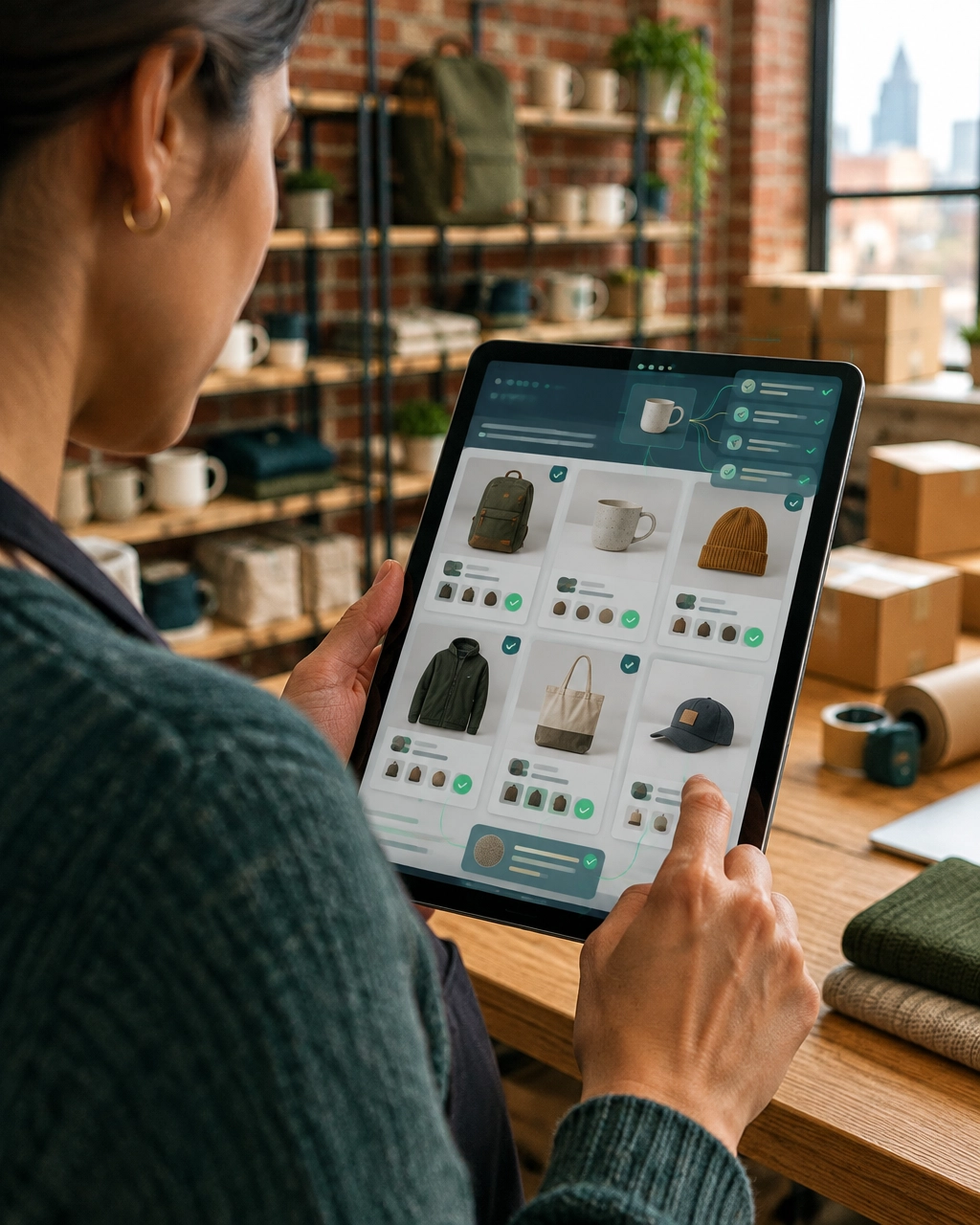
A provider might analyze search queries, chat transcripts, reviews, support tickets, and return reasons to surface recurring questions. Those insights can guide content updates, product filters, and buying guides. AI can also help enrich product feeds and attributes, draft category or product copy, and suggest links, but people should verify accuracy, product claims, and brand voice.
Useful integrations may include guided selling that helps shoppers find the right SKU, customer chat grounded in current catalog and policy data, post-purchase and winback automation, and review or user-generated content workflows. Human review, clear source data, and a way to correct errors matter. Explore AI Automation & Integrations as a practical complement, not a substitute for sound SEO and merchandising.
A capable team can also monitor unusual changes in rankings, click-through rate, organic add-to-cart rate, conversion, revenue per session, stock, or price. The point is to flag problems early and help your team decide what to do next.
The Philadelphia layer: local discovery and pickup
If your store offers pickup, local delivery, or in-person service, local search can connect online discovery to nearby shopping. Keep Google Business Profile details accurate, reflect pickup or service options honestly, and make local inventory useful and current.
Location pages should describe genuine service areas or real storefronts, not create thin neighborhood pages that compete with your national category pages. Where relevant, reflect local delivery, pickup, and seasonal demand in the Philly market. Local SEO Services can help align local listings and location information with your broader ecommerce strategy.
If your store is still fighting its own platform while you try to grow search traffic, start with “How Ecommerce Web Design Helps Philadelphia Businesses Grow”. For a deeper look at the mechanics behind the revenue side, see ecommerce SEO solutions for Philadelphia online stores.
What a monthly engagement should look like
Each month should include active workstreams, specific deliverables, and a regular check-in, not just a spreadsheet of rankings. Deliverables might include technical fixes shipped, category or product updates, feed and structured-data checks, content improvements, and a prioritized plan for the next cycle.
Reporting should separate branded and non-brand organic performance where possible. Look for qualified organic sessions, non-brand organic revenue, add-to-cart rate, revenue per session, indexation health, and a record of on-site work completed. Recommendations are useful; knowing what was implemented, tested, and learned is better.

Nine questions to ask before you hire
- What access will you need to our ecommerce platform, analytics, product feed, or warehouse data?
- Who will implement on-site changes, and how will work be handed off to our developers?
- How will you verify tracking and attribute revenue appropriately?
- How do you coordinate organic search with paid campaigns and promotions?
- What accessibility and Core Web Vitals standards guide your work?
- Where do you use AI, and who reviews its output?
- What should we expect in the first 30, 60, and 90 days?
- How is pricing structured, and what work is included in the monthly fee?
- Can the strategy adapt if a tactic isn’t producing useful results?
Be cautious if a provider reports only rankings, skips technical work, publishes generic blog posts disconnected from your catalog, promises unchecked “AI content at scale,” or can’t explain revenue attribution and on-site delivery. A retainer without shipped work and transparent reporting is hard to evaluate.
Frequently asked questions
How soon should we expect results?
Timing depends on your site, catalog, competition, and implementation pace. The first phase should establish a baseline and identify issues; later reporting should show what changed and how performance is trending.
Does every product variant need its own indexable page?
Not necessarily. The right setup depends on the product, customer search behavior, and how your platform handles variants. Ask for a clear canonical and indexation policy.
Can AI write all our product descriptions?
It can help draft or enrich content, but factual details, differentiation, and brand voice need human review.
Should our agency promise rankings?
Be wary of guaranteed positions. Ask instead for measurable work, clear reporting, and a strategy connected to qualified traffic and sales.
Ecommerce SEO should feel like ongoing, accountable work, not a report that leaves your team with a list of fixes. If your Philadelphia store is ready to connect technical SEO, product discovery, and useful AI integrations, contact BENT Enterprise to talk through what your ecommerce SEO services should actually include in the next 90 days.