
If you’re running a business in Philadelphia: whether it’s a law firm in Center City, a boutique in Fishtown, or a growing HVAC service in Northeast Philly: you know the "Lead Headache."
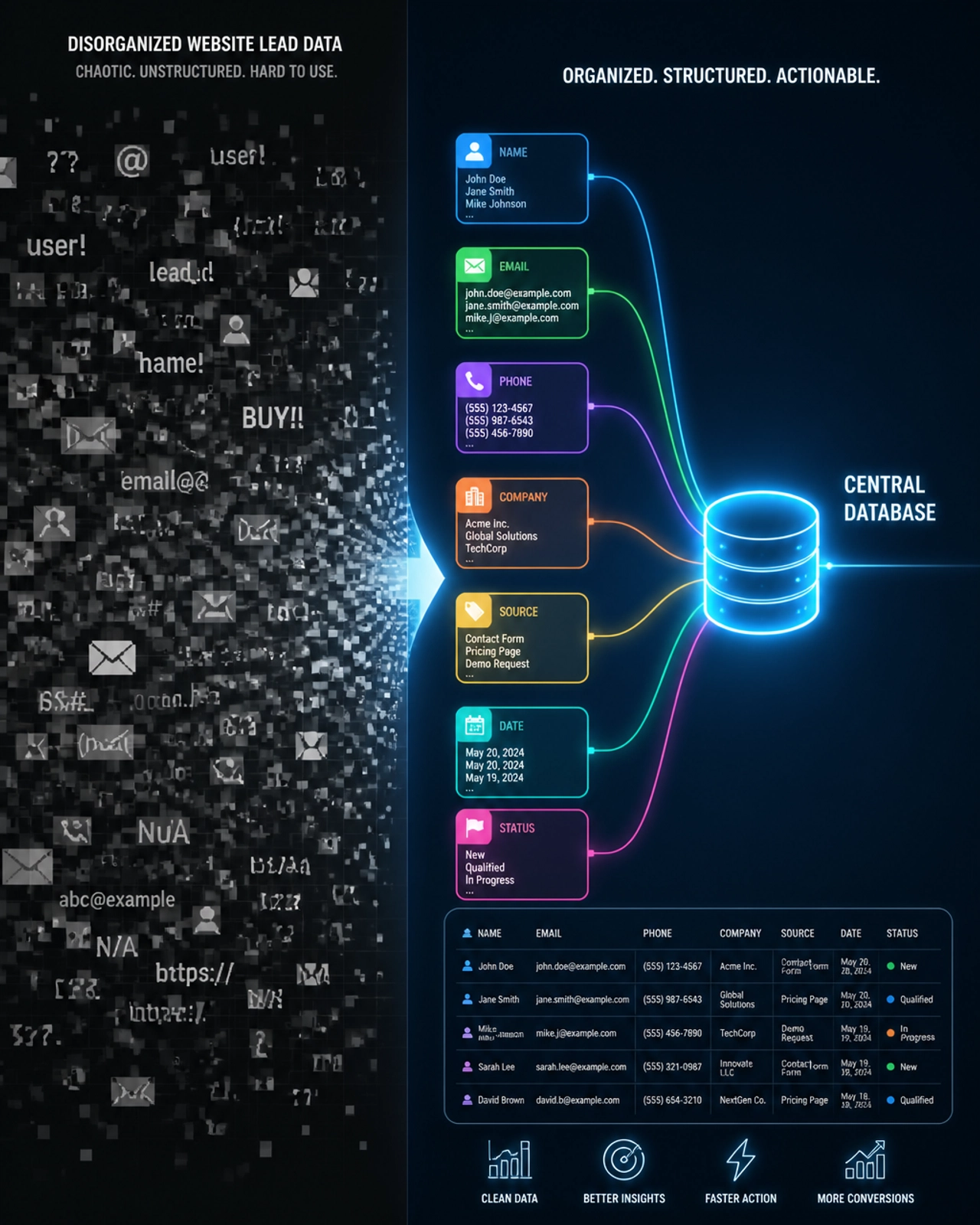
It usually goes like this: You spend money on Local SEO services to get people to your site. They find you, they like you, and they fill out your contact form. But then, the data hits your inbox. It’s messy. Someone put their phone number in the "Message" box. Another person didn't specify what service they need. Half of them are "tire kickers" who aren't even in your service area.
By the time you or your team manually sorts through the mess, the lead has already gone cold and called your competitor.
In 2026, "just a contact form" isn't enough. It’s time to talk about AI-powered intake forms: the secret weapon that turns chaotic website inquiries into clean, actionable data that closes deals while you sleep.
The "Lead Mess" Problem (and Why It’s Costing You Money)
Most small business websites use static forms. These are basically just digital versions of a paper form from the 90s. They don't think; they just collect. This leads to three major problems:
- Garbage In, Garbage Out: If a user provides incomplete or nonsensical information, your CRM (Customer Relationship Management) system gets cluttered with "junk."
- The Manual Triage Slog: You have to spend hours every week reading through emails to decide which leads are worth a phone call.
- The Speed-to-Lead Gap: Research consistently shows that if you don't respond to a lead within five minutes, your chances of closing drop by 80%. If you're manually processing data, hitting that five-minute mark is impossible.
As we discussed in our previous post on The Hidden Cost of Disconnected Tools, having a website that doesn't "talk" intelligently to your other systems is a silent profit killer.
Enter the 2026 AI Intake System
In 2026, the technology has shifted. We’ve moved away from "static boxes" toward "intelligent agents." An AI-powered intake form isn't just a place to type; it’s a filter, a researcher, and an assistant rolled into one.
Here is how these systems are transforming the Philadelphia small business landscape.
1. Conversational Qualification
Instead of a long, intimidating list of 20 fields, modern forms use Conversational AI. The form asks one question at a time. Based on the answer, the AI decides what to ask next.
If a potential client tells your law firm they have a "family law" issue, the AI doesn't ask them about "corporate tax." It stays relevant. This "branching logic" has existed for years, but AI now makes it dynamic. The system can understand natural language, meaning it can "read" a message and categorize the lead’s intent before they even hit "Submit."
2. Real-Time Data Sanitization
One of the biggest perks of AI-integrated database management is that the AI cleans the data before it ever hits your CRM.
- Phone numbers are formatted correctly.
- Addresses are verified against Google Maps (ensuring they are actually in your service area).
- Company names are cross-referenced with LinkedIn or public databases to fill in missing info (like industry or company size).
By the time you see the lead, it’s a "Clean Record." No more guessing what "Jhn Smth" meant when he typed "hvac hlp."
3. Automatic Lead Scoring
Not all leads are created equal. An AI intake form can "score" a lead based on your specific criteria. For example, if you are a high-end Custom Web Design agency, you might want to prioritize leads with a certain budget or timeline.
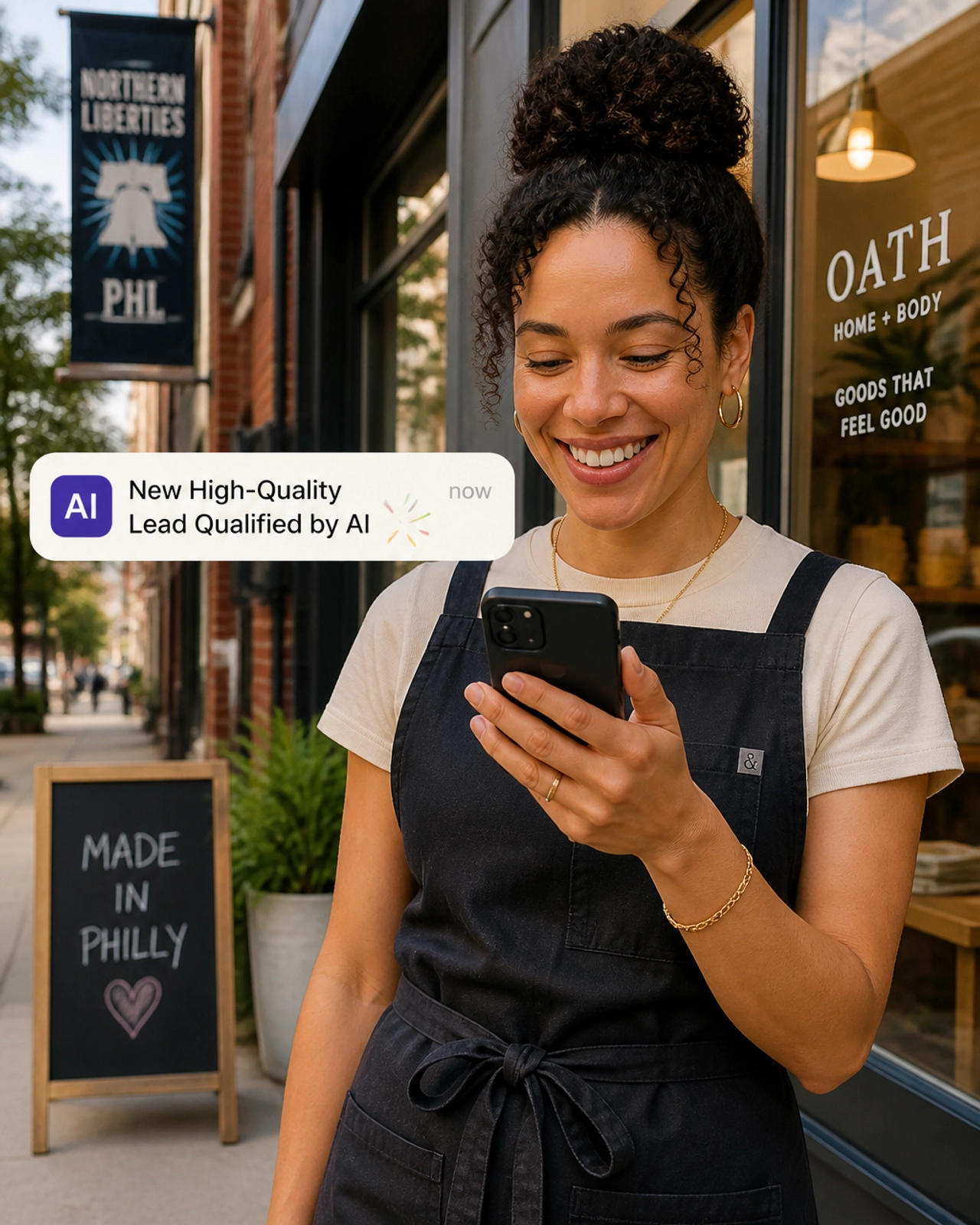
The AI looks at the responses, compares them to your "Ideal Customer Profile," and tags the lead as Hot, Warm, or Cold. It can even trigger an immediate text message to you for the "Hot" leads, while sending the "Cold" ones to an automated nurturing sequence.
How It Works: The Workflow of the Future
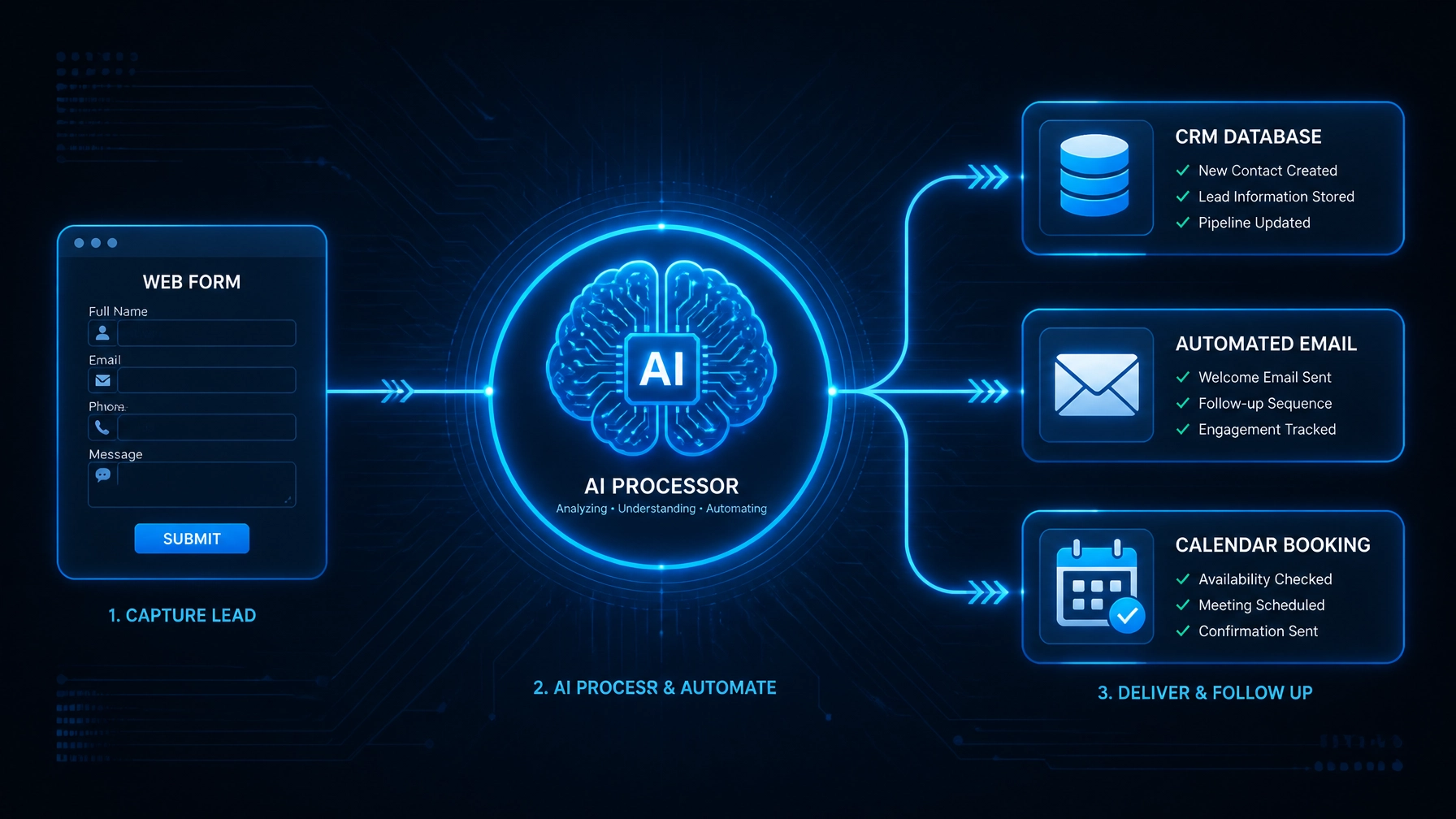
At BENT Enterprise, we don't just build websites; we build "Operations Engines." Here’s a look at the "Form-to-Pipeline" workflow we implement for our Philly clients:
- The Catch: A visitor lands on your site (thanks to your Google Business Page optimization). They engage with a conversational AI intake widget.
- The Filter: The AI asks qualifying questions. If the lead isn't a good fit (e.g., they are outside your service area), the AI politely directs them to helpful resources instead of wasting your time.
- The Sync: For qualified leads, the AI pushes the data through a "webhook." It instantly creates a contact in your CRM, a task in your project management tool, and an event on your calendar.
- The Action: The system sends an automated, personalized email that actually sounds like a human wrote it: mentioning specific details the lead provided.
- The Close: You walk into your office the next morning with a calendar full of pre-qualified appointments.
Real-World Examples in Philadelphia
The "Fishtown HVAC" Scenario
A local HVAC company was getting 50 inquiries a week. 30 of them were for services they didn't offer or were outside their zone. By implementing an AI intake form, the owner stopped playing "phone tag." The AI now asks for the ZIP code and the type of unit first. If it's a fit, it asks the customer to upload a photo of the unit's serial number. The owner now arrives at every job knowing exactly what part to bring.
The "Center City Law" Scenario
A boutique law firm was overwhelmed with generic "I need a lawyer" emails. We integrated an AI agent into their custom web design. The AI now triages the cases. It identifies "Emergency" cases (like someone currently at a police station) and triggers an immediate phone alert to the lead attorney, while scheduling standard consultations for others.
Why Philadelphia Businesses Need This NOW
Philadelphia is a competitive market. Whether you’re in real estate, professional services, or home repairs, your customers expect a "Right Now" response.
If your website is just a static brochure with a clunky form, you’re essentially leaving the front door of your business locked. AI-powered intake forms act like a 24/7 digital concierge. They greet your visitors, answer their basic questions, and make sure your team only spends time on the leads that actually move the needle.
And let’s be honest: nobody likes manual data entry. It’s tedious, prone to error, and frankly, it’s a waste of your talent.
Getting Started with BENT Enterprise
Transitioning to an AI-powered lead system might sound like a massive undertaking, but it’s simpler than you think when you have the right partner. At BENT Enterprise, we specialize in:
- Custom AI Integrations: Connecting your forms to the tools you already use (Slack, HubSpot, Salesforce, or even just a Google Sheet).
- Operational Web Design: Ensuring your site isn't just pretty, but actually works for your bottom line.
- Ongoing Maintenance: We don't just "set it and forget it." We monitor your data flows to ensure everything stays clean and secure.
If your website is currently just a "black hole" where leads go to die, it's time for an upgrade. Don't wait until your competitors in the Main Line or South Philly beat you to it.
Ready to turn your website into a lead-closing machine?
Contact BENT Enterprise today for a free consultation. Let’s clean up your data and get your business moving at the speed of 2026.