
The 2026 Website Stack: What Philadelphia Businesses Should Use (And What to Avoid)
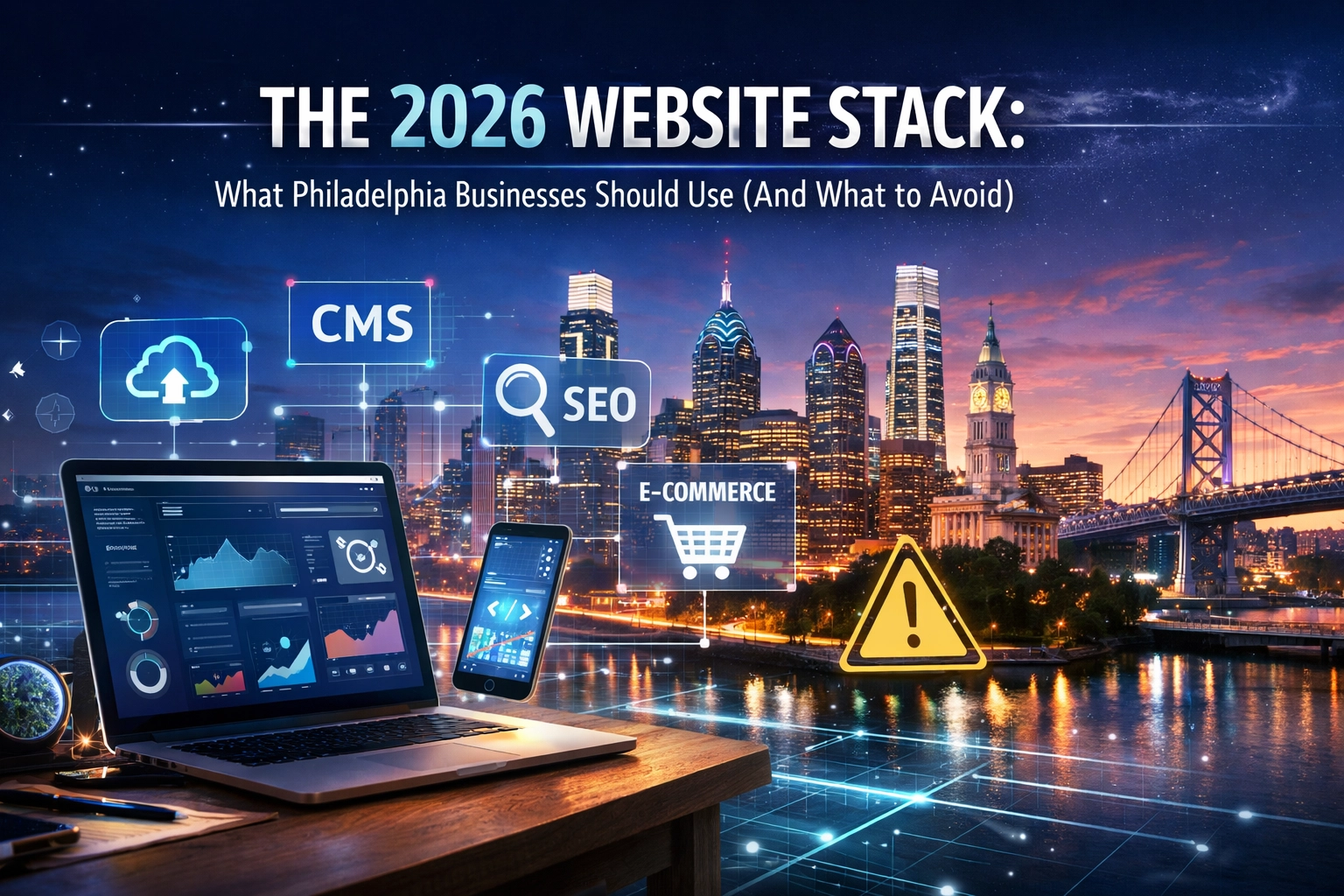
It’s March 2026, and if your Philadelphia business is still running on a website built with 2022 logic, you’re likely feeling the friction. The digital landscape hasn’t just "evolved", it’s been rebuilt from the ground up by AI, automation, and a much higher standard for user experience.
Back in the day, a "good" website was just a digital brochure that didn’t break on mobile. Today, a website is the central nervous system of your business. It’s where your leads are qualified, your data is synced, and your customer service starts before a human even picks up the phone.
At BENT Enterprise, we’ve seen too many Philly small businesses get stuck with "legacy bloat", overpaying for slow, disconnected tools that actually make their lives harder. If you’re looking to upgrade or build fresh this year, here is the definitive 2026 website stack designed for growth, efficiency, and a competitive edge in the City of Brotherly Love.
The "Must-Haves": The Core Pillars of a 2026 Stack
The goal in 2026 is integration over isolation. You don’t want a website; you want an operations engine.
1. The Performance Layer: Speed is Non-Negotiable
Search engines (and humans) have zero patience in 2026. If your site takes more than a second to be fully interactive, you’ve already lost the click. We’ve moved past heavy, bloated themes. The winners today use lightweight frameworks that prioritize "Core Web Vitals" right out of the box.
Whether you’re a law firm in Center City or a boutique in Fishtown, your foundation needs to be solid. While hosting services are the essential basement of your house, the frame needs to be built with modern website development practices that focus on clean code and rapid delivery.
2. The Intelligence Layer: AI Integrations
This is the biggest shift. A 2026 stack is nothing without AI integrations. We aren't just talking about a chatbot that says "Hello." We’re talking about:
- Dynamic Intake Forms: Forms that change their questions based on what the user types, qualifying leads in real-time.
- Automated Content Personalization: Showing different testimonials or case studies depending on whether the visitor came from a LinkedIn ad or a local Google search.
- Internal Data Syncing: When someone fills out a form, that data shouldn't just sit in an email inbox. It should automatically flow into your CRM, trigger a Slack notification, and set a follow-up task.

The Stack Components: What to Use
If we were building a high-converting, automated site for a Philly business today, here’s exactly what would be in the "Yes" column:
A Modular CMS (Content Management System)
Stop using "all-in-one" builders that lock your data in a cage. We recommend platforms that allow for easy API integrations. WordPress is still a powerhouse if it’s kept lean, but headless options are becoming the go-to for businesses that need extreme speed and security.
API-First CRM Integration
Your website should be best friends with your CRM (HubSpot, Pipedrive, or even a custom-built solution). Every interaction on your site should feed your "Single Source of Truth." If your website doesn't talk to your sales pipeline, you're leaving money on the table.
Localized SEO Architecture
Philadelphia is a competitive market. To win the "Map Pack," your stack needs to support advanced Schema markup and localized landing pages. You can read more about how the search landscape has shifted in our breakdown of why legacy search strategies are struggling.
The "Avoid" List: What’s Killing Your Conversion in 2026
It’s just as important to know what to cut as it is to know what to include. Here is what is officially "out" for 2026:
- Bloated Page Builders: If your site requires 50 different plugins just to display a gallery, it’s time to scrap it. Excessive plugins are the #1 cause of security vulnerabilities and slow load times.
- "Dumb" Contact Forms: A form that just sends an email is a relic. In 2026, if you aren't capturing data in a structured way that triggers an automated workflow, you’re creating manual work for yourself.
- Stock-Only Visuals: Philly customers crave authenticity. Using the same stock photos as your competitor across the street kills trust. Invest in branding services that actually reflect your local identity.
- Disconnected Chatbots: If your AI assistant can’t check your calendar or look up an order status, it’s just annoying your customers.
Why the "Philly Factor" Matters
We’ve worked with plenty of businesses across the 215 and 267 area codes. Philadelphia business owners are no-nonsense. They want tools that work, systems that save time, and a digital presence that actually generates revenue.
The "2026 Stack" isn't about having the flashiest tech; it's about having the most efficient tech. It’s about ensuring that when a potential client searches for your services while walking down Broad Street, your site loads instantly, answers their specific questions via an AI-powered assistant, and lets them book a consultation in three clicks.
The Blueprint: How to Transition
If your current setup feels like it’s held together by duct tape and prayers, don't panic. You don't have to change everything overnight. Here is the 3-step transition plan we suggest for our clients at BENT Enterprise:
- The Audit: Look at your lead flow. Where does the data stop moving? If you have to manually type information from an email into a spreadsheet, that’s your first "fix."
- The Foundation: Ensure your website development is built on a framework that supports modern API connections.
- The Intelligence: Start small with one AI integration: like an automated follow-up sequence or a smart intake form: and scale from there.
Conclusion: Don't Get Left Behind
The gap between businesses that use a modern stack and those that don't is widening. By the end of 2026, the "efficiency tax" of using old, disconnected tools will be too high for most small businesses to pay.
Your website should be your hardest-working employee. It shouldn't need a lunch break, it shouldn't forget to follow up with leads, and it should never, ever be "down for maintenance" during business hours.
Ready to see how a modern, AI-integrated stack can transform your Philadelphia business? Whether you need a full rebuild or just want to plug some intelligence into your existing site, we’re here to help. Check out our other blog posts for more tips on automation, or better yet, skip the reading and let's get to work.
Contact BENT Enterprise today to schedule a consultation and let’s build your 2026-ready website engine.