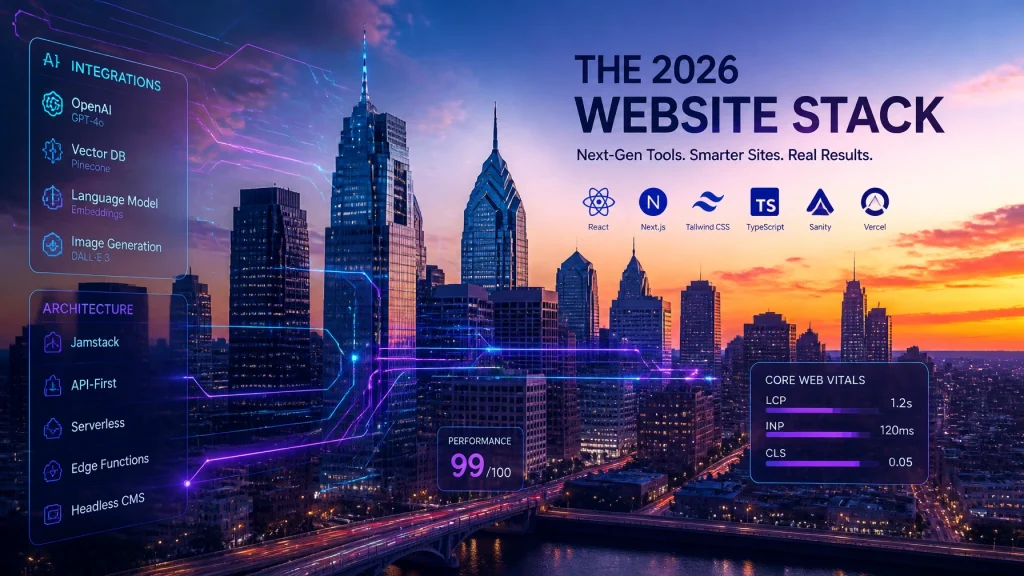
If you’re running a business in Philadelphia today: whether you’re a law firm in Center City, a boutique in Fishtown, or a contractor serving the Main Line: you know the hustle is real. But here’s the thing: by 2026, the "hustle" isn't just about how hard you work; it’s about how hard your technology works for you.
The days of your website being a "digital brochure" are long gone. In 2026, your website is your best salesperson, your customer service lead, and your operations manager all rolled into one. If your site is still just a static collection of pages, you’re essentially leaving money on the table for your competitors to scoop up.
So, what does a winning "Website Stack" look like right now? At BENT Enterprise, we’ve spent years refining the perfect mix of speed, design, and AI automation. Let’s break down what you should be using: and what you should avoid like a pothole on I-95.
The Foundation: Why Your "CMS" Matters More Than Ever
In the past, people obsessed over hosting. While fast hosting is still the foundation, the real magic in 2026 happens at the Framework and CMS (Content Management System) level.
What to Use: Modern Frameworks & Headless Builders
For most Philly small businesses, we’re seeing a shift toward two main paths:
- Next.js & React: This is the gold standard for performance. It’s incredibly fast, which Google loves for SEO. If you want a site that feels as snappy as an app, this is it.
- Framer or Webflow: For businesses that prioritize high-end custom web design and visual storytelling, these tools allow for stunning interactions without the "bloat" of old-school builders.
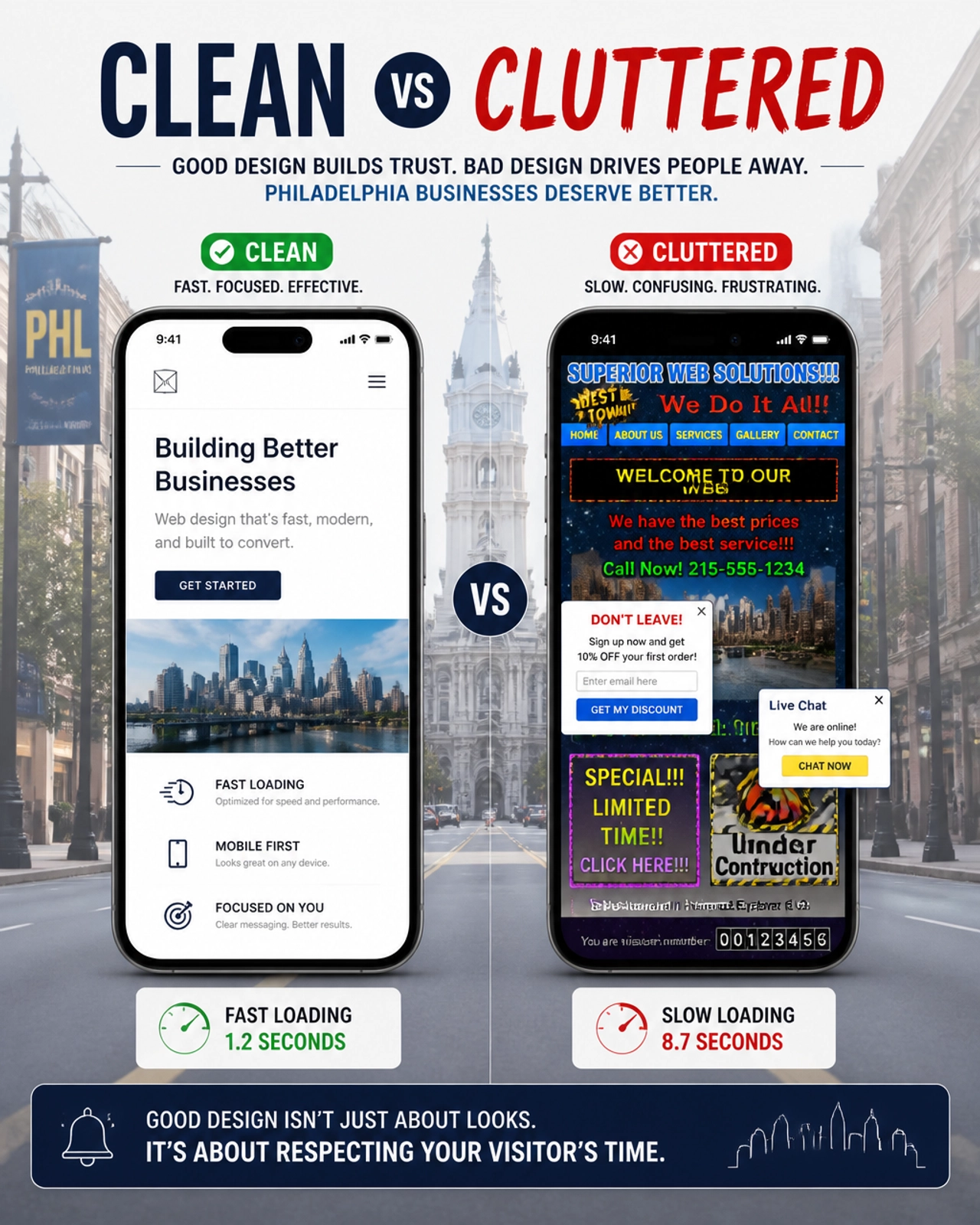
What to Avoid: The "Frankenstein" WordPress Site
Don't get us wrong: WordPress still powers a huge chunk of the web. But the "2026 trap" is the DIY WordPress site loaded with 45 different plugins. Each plugin is a potential security hole and a speed killer. If your site takes more than two seconds to load, your local customers are already clicking back to the Google search results.
The AI Layer: Beyond the Basic Chatbot
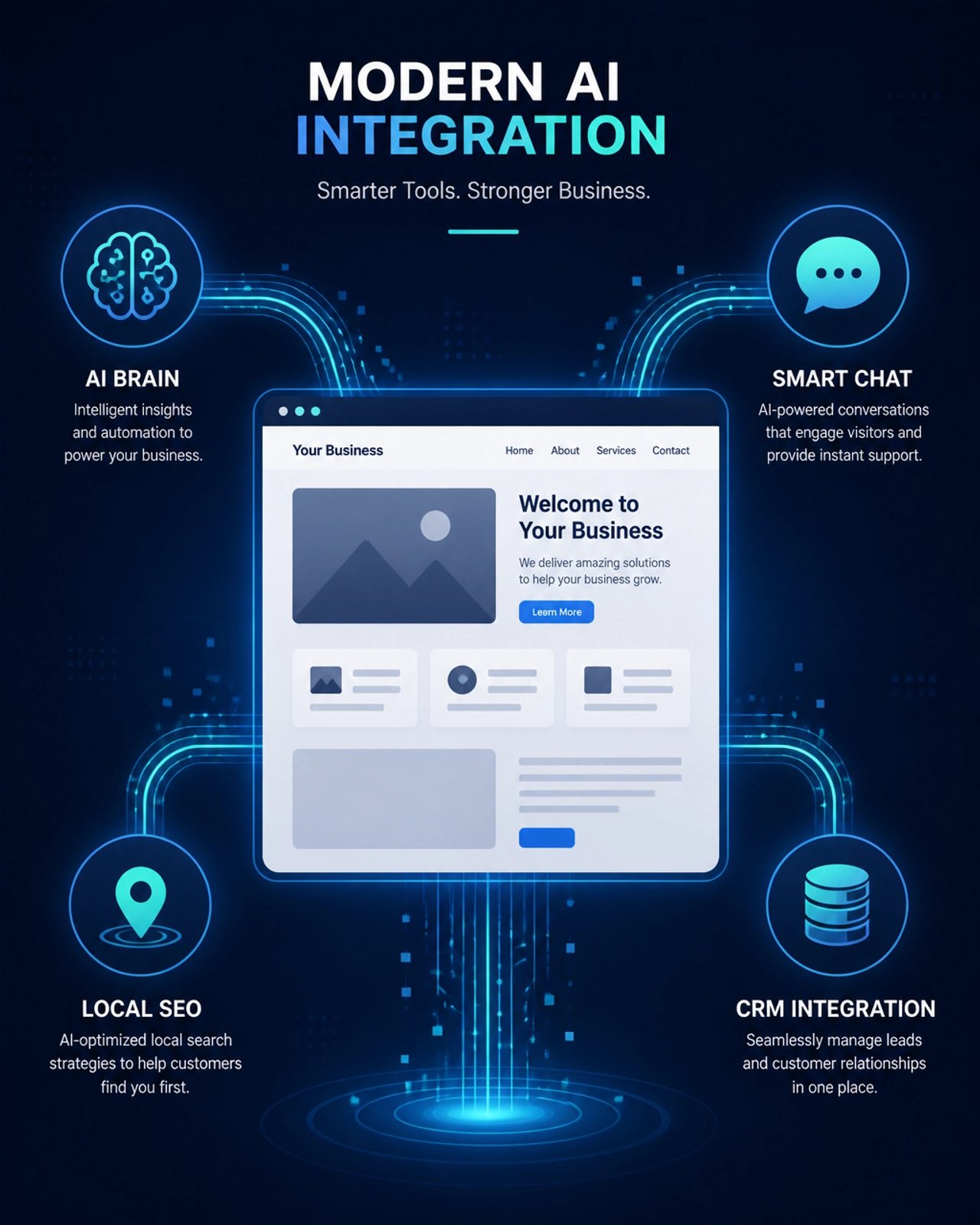
If you haven't integrated AI into your website stack yet, 2026 is the year it becomes a requirement, not a luxury. But we aren’t talking about those annoying pop-up boxes that just say "How can I help you?" and then fail to answer anything.
What to Use: Intelligent Operations & Personalization
The modern stack uses AI to:
- Predictive Lead Scoring: Automatically identifying which website visitors are likely to buy based on their behavior.
- Dynamic Content: Showing a different hero image or headline to a visitor from South Philly versus someone from a national audience.
- Automated Intake: Using AI to turn messy contact form data into clean, actionable entries in your CRM.
By leveraging AI automation systems, you aren't just "talking" to customers; you're building a system that prepares your sales team for success before they even pick up the phone.
What to Avoid: "Bot Spam"
Avoid generic, uncurated AI content. Google’s algorithms in 2026 are smarter than ever. If you’re just pumping out low-quality AI blog posts to try and "trick" the search engine, you’re going to get penalized. Content still needs a human touch and local Philadelphia relevance to rank.
Local SEO: Winning the Philly Map Pack
For a local business, the website stack must include a heavy focus on Local SEO. In 2026, "Search" isn't just about a list of links; it’s about being the definitive answer for AI-powered search assistants (like Gemini, Claude, and GPT-5).
What to Use: Schema Markup & Hyper-Local Data
Your stack needs to include Schema.org markup. This is "hidden code" that tells search engines exactly what you do, where you are, and what your customers think of you.
- Local Entity Links: Connecting your site to local landmarks, neighborhoods, and Philly-specific citations.
- Real-Time Review Integration: Automatically pulling in your latest 5-star Google reviews to build instant trust.
Check out our technical SEO services to see how we structure the back-end of sites to dominate local searches.
The "Operations Engine": Connecting the Dots
Your website shouldn't be an island. In 2026, the best website stacks are "integrated." This means when someone fills out a form on your site, five other things happen automatically:
- The lead is added to your CRM (like HubSpot or Salesforce).
- An automated, personalized follow-up email is sent.
- A task is created for your sales team.
- The lead’s location is mapped for your service route.
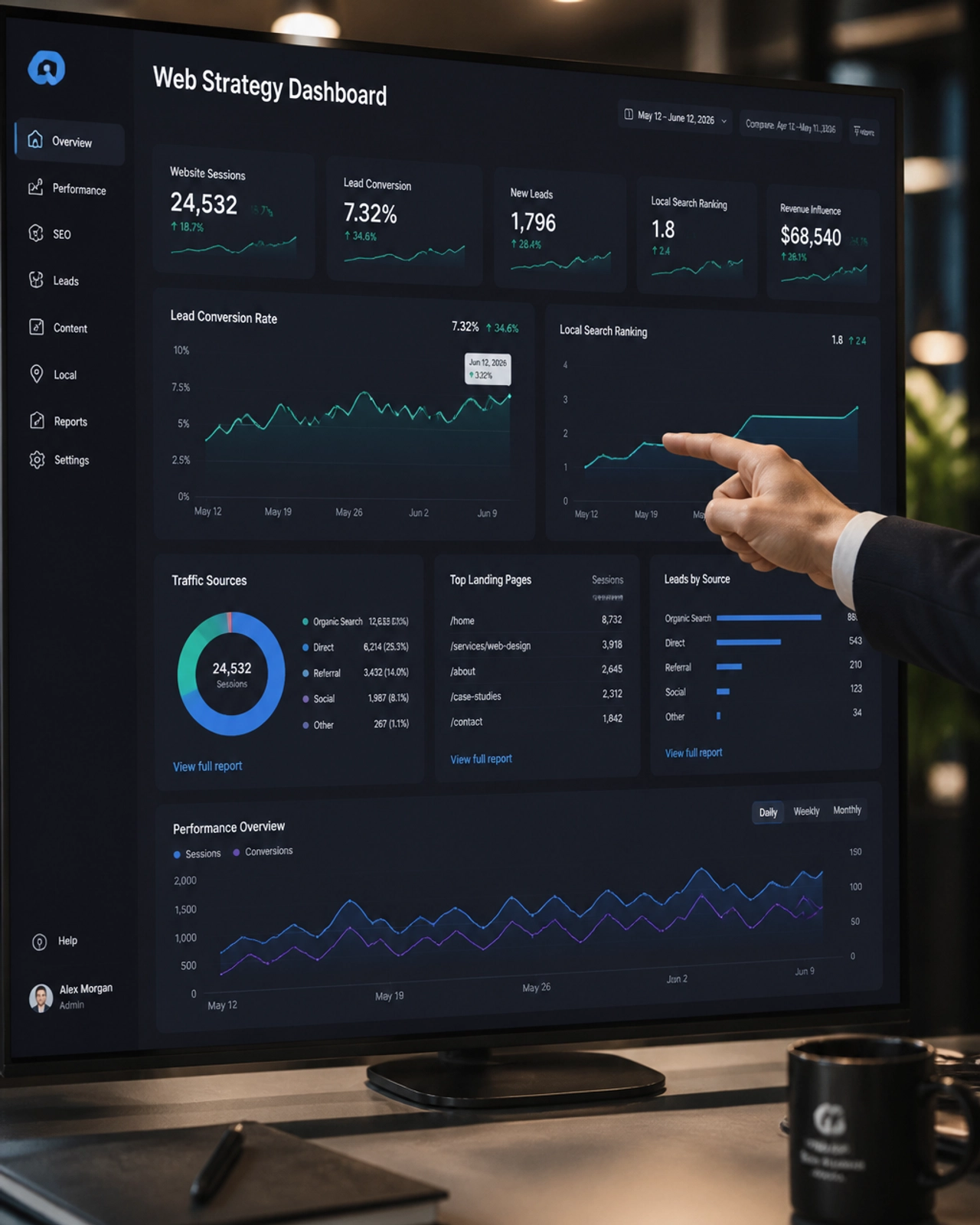
- Your Local SEO dashboard tracks the conversion.
What to Use: Webhooks and Integration Tools
We recommend using Make or Zapier as the "glue" for your stack. These tools allow your website to talk to your accounting software, your calendar, and your marketing tools seamlessly.
What to Avoid: Manual Data Entry
If you are still copying and pasting email addresses from your website notifications into an Excel sheet, you are losing hours of billable time every week. 2026 is the year of "input once, use everywhere."
Performance & Accessibility: No More Excuses
Philadelphia is a diverse city, and your website needs to reflect that. In 2026, ADA Compliance isn't just a legal "nice-to-have"; it’s a core part of your web design.
- Speed: Use a CDN (Content Delivery Network) like Cloudflare to ensure your site loads instantly across the Delaware Valley.
- Accessibility: Ensure your site is navigable by screen readers and has high-contrast modes. This actually helps your SEO, as search engines prioritize accessible content.
Summary: Your 2026 Checklist
To stay competitive in the Philadelphia market, your website stack should look something like this:
- CMS: Next.js or a high-end visual builder (Webflow/Framer).
- AI: Custom-trained assistants and automated lead processing.
- SEO: Schema-heavy, local-first architecture.
- Automation: Connected to your CRM via Webhooks/Zapier.
- Design: Mobile-optimized, ultra-fast, and ADA-compliant.
Building this on your own can be a headache, especially when you’re busy running the actual business. That’s where we come in. Whether you need a full custom web design or a smarter way to handle your leads, BENT Enterprise has the local expertise to get it done.
Ready to upgrade your stack and stop fighting with outdated tools? Contact us today and let’s build something that actually grows your business.